
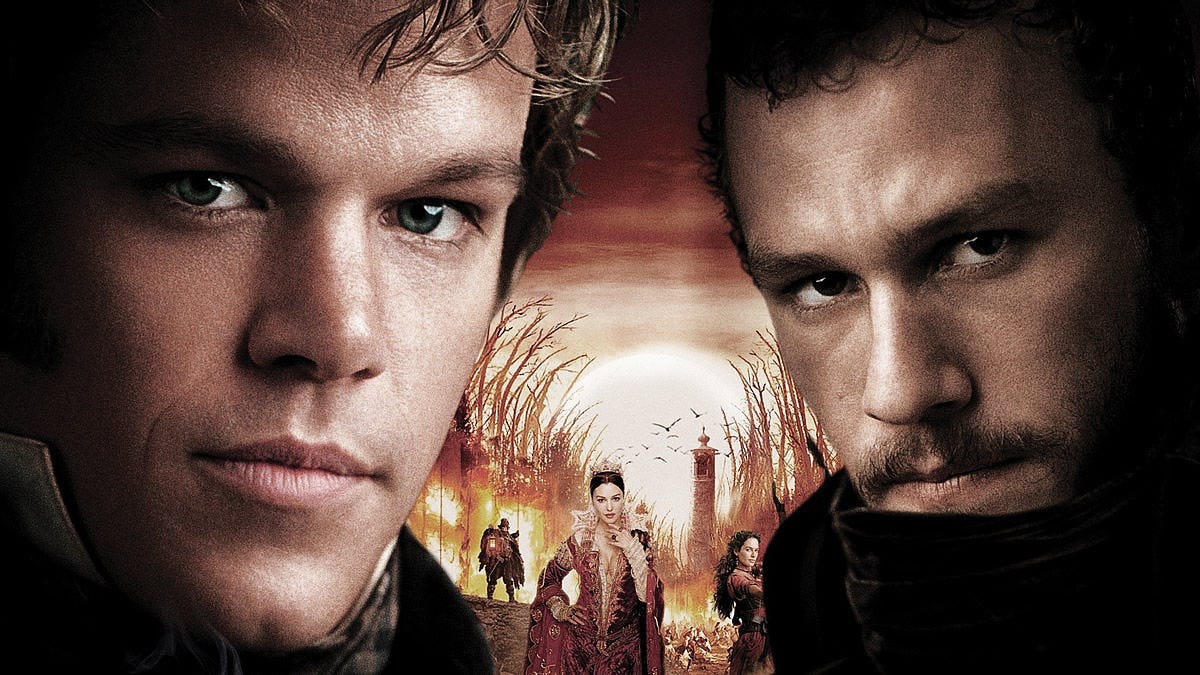
Because they exist in the public domain, fairy tales can be adapted by anyone as long as they’re not based on a specific interpretation under copyright. The early 20th century saw the debut of darker fairy tale tellings like Jean Cocteau’s Beauty and the Beast and Powell and Pressburger’s The Red Shoes, but many of the timeless stories they drew inspiration from became synonymous with the Walt Disney Company’s animated films. Even if the original fairy tales contained dark, provocative material, more mature film adaptations had to contend with family-friendly expectations tied to Disney classics like Cinderella, Sleeping Beauty, and Snow White and the Seven Dwarves. Twenty years ago today, a legendary director attempted to upend those expectations.
After earning worldwide recognition for his work with Monty Python, director Terry Gilliam developed a unique talent for making bizarre, imaginative arthouse films with mainstream crossover appeal. Time Bandits satirized world history, 12 Monkeys imagined an idiosyncratic dystopian future, and The Fisher King was loosely inspired by Arthurian mythology, so Gilliam seemed like the ideal choice to helm The Brothers Grimm, a fantasy adventure named after the 19th-century German siblings who revived popular interest in fairy tales.