Get all your news in one place.
100's of premium titles.
One app.
Start reading
The Conversation
The Conversation
Christopher Palma, Teaching Professor of Astronomy & Astrophysics, Penn State

2 spacecraft flew exactly in line to imitate a solar eclipse, capture a stunning image and test new tech

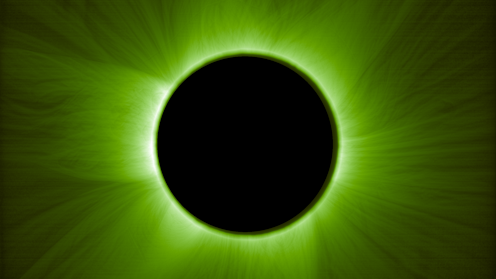
The solar corona, as viewed by Proba-3's ASPIICS coronagraph. ESA/Proba-3/ASPIICS/WOW algorithm, CC BY-SA

During a solar eclipse, astronomers who study heliophysics are able to study the Sun’s corona – its outer atmosphere – in ways they are unable to do at any other time.

The brightest part of the Sun is so bright that it blocks the faint light from the corona, so it is invisible to most of the instruments astronomers use. The exception is when the Moon blocks the Sun, casting a shadow on the Earth during an eclipse. But as an astronomer, I know eclipses are rare, they last only a few minutes, and they are visible only on narrow paths across the Earth. So, researchers have to work hard to get their equipment to the right place to capture these short, infrequent events.
Sign up to read this article
Read news from 100's of titles, curated specifically for you.
Already a member? Sign in here
Related Stories
Top stories on inkl right now
One subscription that gives you access to news from hundreds of sites
Already a member? Sign in here
Our Picks
Fourteen days free
Download the app
One app. One membership.
100+ trusted global sources.