Get all your news in one place.
100's of premium titles.
One app.
Start reading
The Conversation
The Conversation
Politics
Abby Chandler, Associate Professor of History, UMass Lowell

2 colonists had similar identities – but one felt compelled to remain loyal, the other to rebel

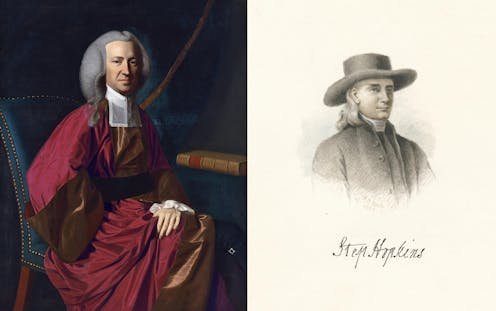
Martin Howard, left, and Stephen Hopkins came to opposing conclusions about their colonial British identities. Howard: John Singleton Copley via Wikimedia Commons; Hopkins: New York Public Library, CC BY-SA

Through the early 1750s, two men in the British colony of Rhode Island – Martin Howard and Stephen Hopkins – had similar backgrounds and led strikingly similar lives. They knew each other, were both supporters of libraries with successful legal careers, and were politically active.

Their writings in the 1760s demonstrate that they were both assessing the political relationship between the North American colonies and Britain.

Sign up to read this article
Read news from 100's of titles, curated specifically for you.
Already a member? Sign in here
Related Stories
Top stories on inkl right now
Our Picks
Fourteen days free
Download the app
One app. One membership.
100+ trusted global sources.