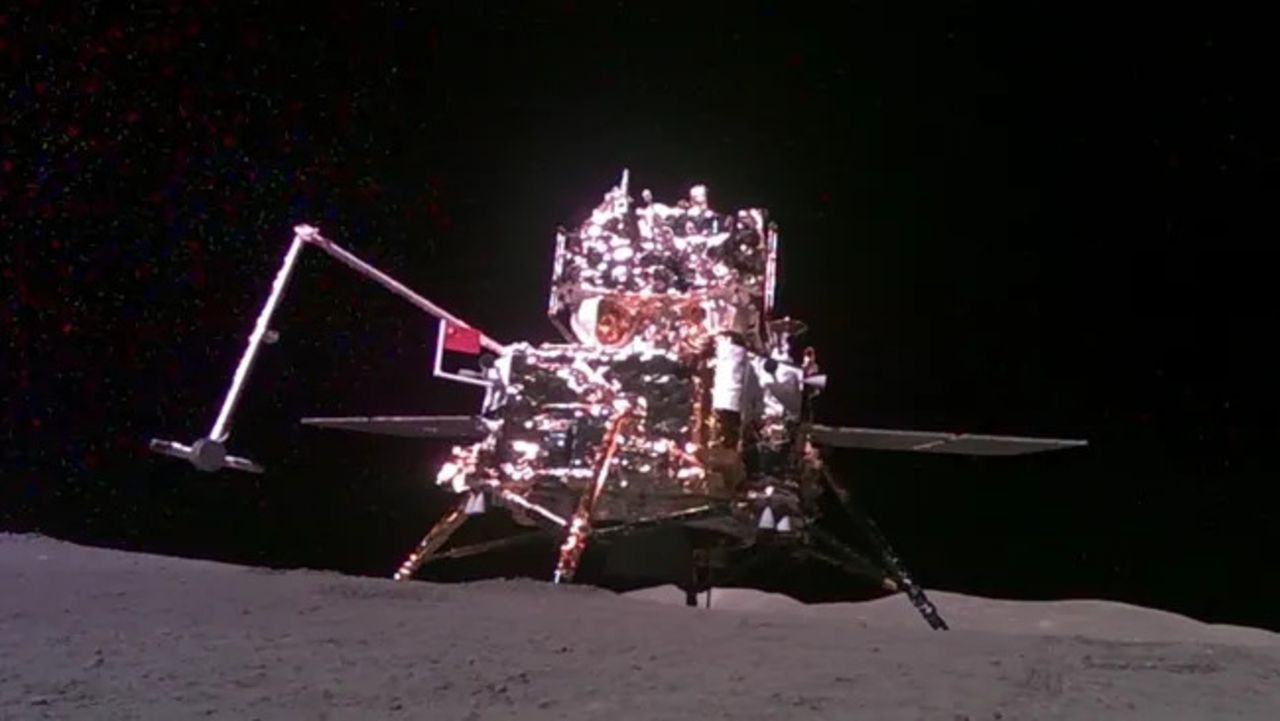
Fragments of a rare type of meteorite have been found in the sample of material brought back from the lunar far side by China's Chang'e 6 mission, and they could help shed light on the origin of Earth's water.
The meteoritic debris found among the 1,935.3 grams (68.3 ounces) of lunar regolith sampled by Chang'e 6 belongs to a class of carbon- and water-rich meteorites known as CI (carbonaceous-Ivuna) chondrites. On Earth, these meteorites account for less than 1% of all collected space rocks; their most notable example is the Ivuna meteorite that fell in Tanzania in 1938. Out in space, however, it's a different story, with the asteroids Ryugu and Bennu, visited recently by Japan's Hayabusa2 mission and NASA's OSIRIS-REx, respectively, both displaying similarities to CI chondrites.