
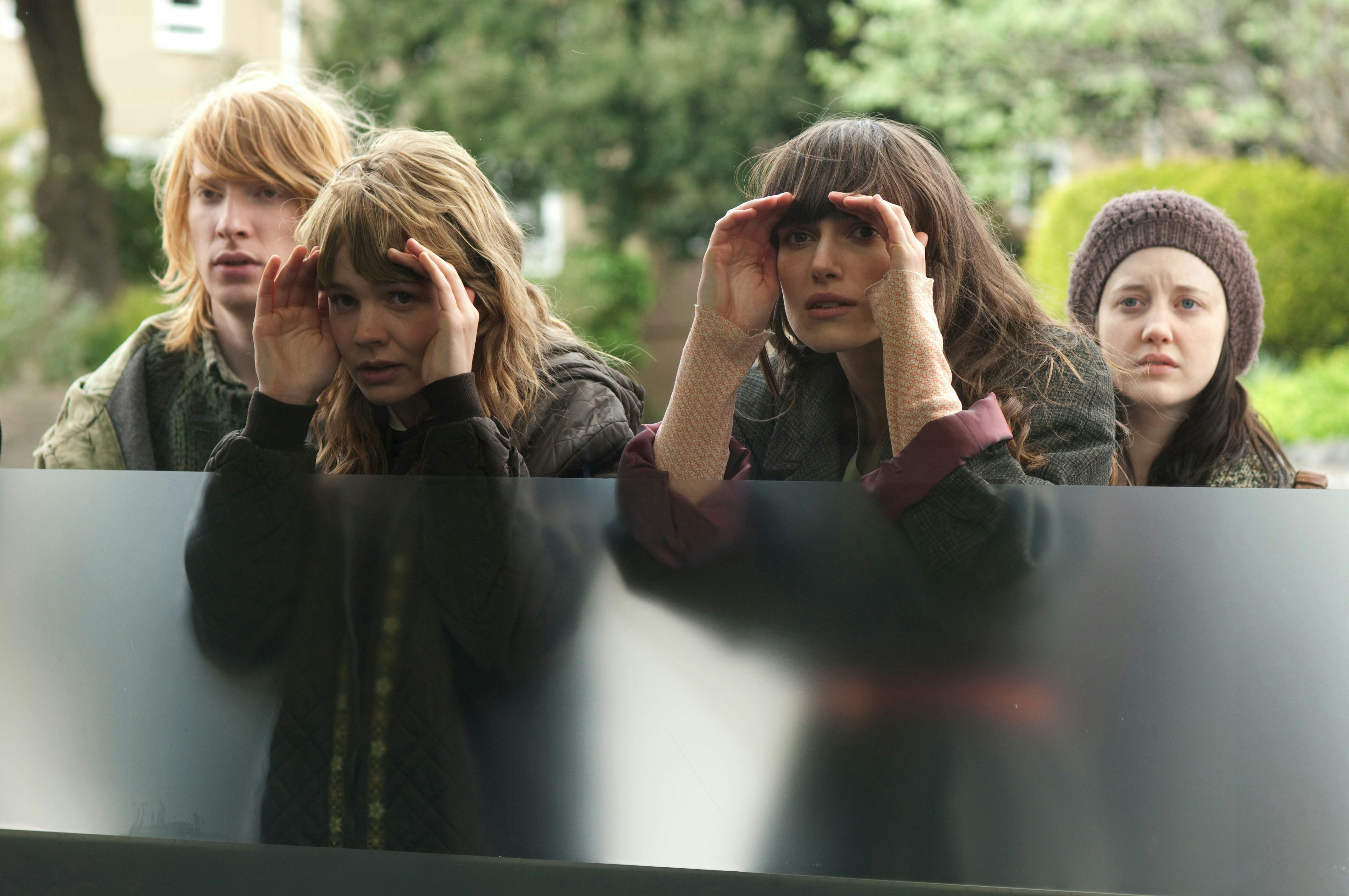
British dystopia spares no bleakness. The genre is not known for its optimism, but in dystopian stories from the United Kingdom, the country’s history of austerity, suppression of radicals, and rigid hierarchy feel especially pronounced and depressing, often without needing the outsized spectacle of Hollywood sci-fi. Traumatizing television films like Threads speculated on nuclear armageddon, while literary adaptations like A Clockwork Orange and 1984 revealed the desolation of paranoid authoritarians trying to “correct” their subjects. And even though Children of Men was the rare visceral and cinematic dystopian thriller set in England, this equated to a constant, smothering sense of dread and despair, making its final, bittersweet image of hope all the more precious and poignant.
British dystopia often abstracts modern society into a devolved or fortified version of our current reality, but rarely tries to style itself as an exact mirror — or alternate vision of the past. With Never Let Me Go, an adaptation of Kazuo Ishiguro’s novel released 15 years ago, British sci-fi got as close as possible to replicating its punishing but mundane society with fidelity and honesty — especially in how it shows the dangerous but normalized ways Britain discriminates between the value of its citizens’ lives. This supremely subdued cloning drama underlines a central, honest tenet of science fiction: technology is far more likely to worsen disparities between societal groups than repair them.