Get all your news in one place.
100’s of premium titles.
One app.
Start reading
Marie Claire
Marie Claire
Lifestyle
Mischa Anouk Smith

23 Inspirational Women on the Bold Changes They Want to See This International Women’s Day

International Women's Day.

Welcome to Women’s History Month 2026. While I celebrate a dedicated month—and, of course, the dedicated International Women’s Day, to champion women—there’s no denying that Women’s History Month has lost steam over recent years. Journalist and TEDx Talk speaker Chloe Laws spoke of her own scepticism when we chatted for this piece: “[International Women’s Day] was born from radical action, socialism, and women protesting, but that past is often not present nowadays.”It’s something I’ve bristled with myself, especially at a time when activism burnout is on the rise. Then I read the headlines: Shein is under investigation for selling childlike sex dolls—just the latest example of the sexualisation of young girls that has been normalised for decades. Then there’s the news that the gender pay gap isn’t set to close until 2056, meaning generations of women will spend their entire working lives earning at least 50 days of unpaid labor each year. That’s just a snapshot. There’s also the slew of image abuse festering on Grok and revelations that the ADF—the group who helped overturn Roe v. Wade—has its sights set on England.I don’t want to dwell on the negatives. As a woman, if you’re reading this, you already know in your bones the dangers we face. But when it feels harder than ever to muster the strength to rally, protest, and take action—and with misogyny on the rise and violence against women and girls remaining shamefully prevalent—it’s worth touching on the many reasons we need to stay engaged and activated. As Deborah Frances-White said—also for this story: “It’s easy to feel exhausted and defeated. What we must remember is they [the patriarchy] don’t do this when we are quietly falling behind.”We need voices like Deborah’s, Ashley James’, and Alex Light’s, who all gave their time to speak about the importance of International Women’s Day and the critical need to fast-track progress in achieving gender equality and empowering women across the globe.Yes, strides have been made, but the pace of change has often been slow—a “long and winding road,” as Baroness Floella Benjamin described it—leaving many women and girls still facing significant barriers in education, employment, health, and political representation. In other words, there is much work to be done.So, if, like me, you’re struggling with activism fatigue, I hope you’ll find strength and solidarity in the speeches below. Bookmark and save for later, share it with your community, and—as Deborah says—meet up with each other.Happy International Women’s Day—today and every day.
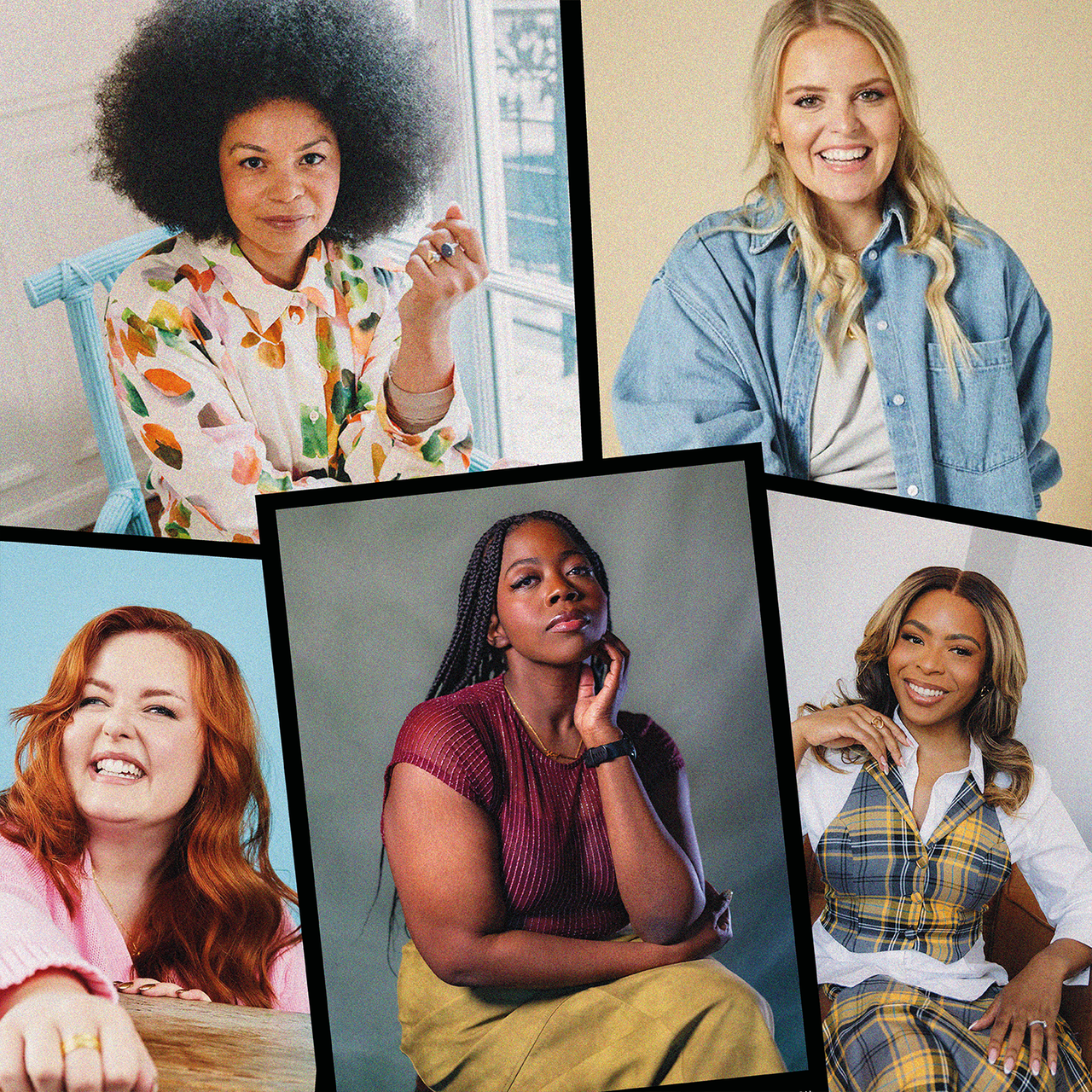
23 Powerful Women on the Change They're Calling for This International Women's Day

"I think International Women's Day is so important because not only do women face a lot of cultural pressures around appearance, ageing, having children, mothering, and parenting, but we also face many structural inequalities. That’s why it’s really important that we all come together on this day to address all of the above and explore how we can make positive, lasting change for women."

"It’s incredibly important that we support one another so we can achieve autonomy and equality, especially in areas like healthcare, equal pay, and the corporate world.For me, it’s also a day to celebrate women and girls, and the efforts we make to build communities around the world. It’s a way to raise awareness that we deserve equal pay, safety, love, comfort, and recognition—because women are the ones who carry this earth. We give birth to future generations and deserve to be exalted as the goddesses we are."

Greater visibility and investment in female healthcare is long overdue.

Stephanie Yeboah

"International Women's Day is so important. I know it can sometimes be seen as just one day or tokenistic, but I think it’s a day where we can speak up and celebrate how many women—and diverse women—are out there.For me, International Women's Day represents freedom and the belief that women are just as capable as men. We come in many shapes and sizes, with many abilities and disabilities, yet I never saw myself represented as a young, blind teenager. I would have loved to see someone like me being proud of who they are on International Women's Day.I’ve spent over ten years, since losing my eyesight at 17, feeling like I was taking up space, feeling invalidated, or scared to truly speak about what I need and what I believe in. But today is about celebrating the best aspects of ourselves and reminding everyone that we should all be confident."

I would have loved to see someone like me being proud of who they are on International Women's Day.

Lucy Edwards

"I'm part of the 50:50 politics campaign trying to get more women into politics and I think it would be nice to accelerate change whether that's so any issues that affect women and girls. Whether that's abuse online, deepfake porn, or the rise in sexism and misogyny. I'd like to see more women making decisions for women and I think where we can do that is by thinking about where we use our votes, but also, if you employ people, think about: are you employing a diverse range of people...because I think if we can make change where we can make change, and we use our voices and write to MPs—that's all quite actionable ways in which we can accelerate change, especially at a time when we're looking at diversity being stripped back in America or we're looking at Andrew Tate getting a free pass. As women, we have the power to choose where we spend our money, choose who we employ, and choose who we vote for."

"The most pressing concern is the increasing negativity towards feminism among young men, with studies showing that 16-29-year-olds are more likely to hold anti-feminist views and that one in five has a positive perception of figures like Tate. The rise of digital misogyny, driven by harmful influencers, weak regulation, and AI-facilitated abuse has serious real-world consequences, from escalating violence against women to the erosion of hard-won rights. To counter this, we urgently need stronger legal protections, greater accountability from tech platforms, and comprehensive digital literacy education."

The rise of digital misogyny, driven by harmful influencers, weak regulation, and AI-facilitated abuse has serious real-world consequences

Sharon Gaffka

"If we want to create lasting change, we need to take a proactive approach by embedding education on consent, healthy relationships, and gender equality into the curriculum through better and more inclusive PSHE (Personal, Social, Health, and Economic) education. Prevention starts in the classroom — teaching young people about respect, boundaries, and the realities of gender-based violence before harmful attitudes take root. Women’s safety isn’t just about reacting to danger; it’s about building a society where harm is less likely to occur in the first place. By making comprehensive, evidence-based education a priority, alongside policies that center on women’s lived experiences, we can create a safer, more equal future."

"Gender equality requires both courage and action to challenge, disrupt and change the status quo of inequality. It is important that both women and male allies work collectively and strategically to challenge the laws and policies that will lead to gender equality across all industries and walks of life.""Young women and girls have so much untapped potential to change the world but have never been allowed to tap into that potential because of societal restrictions and barriers. If we focus on removing those barriers—such as providing a clean water source within a 30-minute round trip—this could save women 77 million working days per year and allow women the time and space to tap into their full potential."

"One of the most urgent issues is addressing intimate partner violence (IPV). In my work, as a clinician and researcher, I've seen how prevalent yet misunderstood this issue is. Abuse isn't always physical; it often starts with subtle forms of control, emotional manipulation, and isolation. Many women don’t recognise these early warning signs, and deeply ingrained cultural narratives about love and loyalty can make it even harder to leave."

Intimate partner violence is the most common form of violence against women, affecting around 736 million women and girls globally.

Dr. Sara Kuburic

"Solidarity starts with listening, believing, and uplifting one another. Women are often conditioned to compete, question their instincts, or minimise their discomfort—especially in relationships. Films like Don’t Call It Love by YSL Beauty serve as vital counter-narratives, challenging collective beliefs about love and the myth that recognising warning signs is easy."

"There are multiple barriers—both societal and internal—to women’s progress. As a confidence coach, I like to focus on the internal barriers women face and how they can begin to overcome them.This International Women's Day, I want to see more women speaking up, showing up, shining their lights, and being visible. Many women are doing incredible things, but they hide and play small, afraid of being judged, disliked, or labelled arrogant or aggressive.The truth is that every single one of us has greatness inside. We have amazing energy and a message the world needs to hear. I would love to see more women being unapologetic about their messages, using their voices in powerful ways, and celebrating other women along the journey."

"We need to ensure that financial independence is respected. New research from Experian found that 71% of Brits are not confident in their ability to identify the warning signs of financial abuse in relationships—whether it’s refusing to discuss finances, irresponsible and controlling financial behaviour or patterns that indicate a lack of financial compatibility and trust within a relationship. If women were encouraged to really own their financial independence and also educated to watch out for financial red flags when it comes to their dating and relationships, it would add to more sense of empowerment."

"We need to dismantle systemic barriers that still hold women back. A big part of that is opening up conversations about money. Financial empowerment starts with open conversations and seeking out expert advice. I'm working with HSBC UK on the launch of their new report, ‘Your Money’s Worth: Defining Wealth in 2025’, which found that 63% of the general population feels uncomfortable talking about money. The research also indicated that on average, women save much less than men. We must address the systemic barriers preventing women from achieving economic security and independence."

"I think International Women's Day is more important now than ever. With everything we’re seeing in the world—conflict, climate disasters—women are often the most affected by these catastrophes and changes. That’s why it’s so important that we come together to support each other, drive meaningful change, and galvanise one another toward a better future."

"It's never felt more pressing to address the real-world impact of online misogyny evolving into IRL violence. We are entering a new era of widespread backlash to feminism, bro-oligarchy fuelled masculine energy and roll-back of DEI programs and content moderation in the US, which will ripple around the world. Men and boys have a key role in accelerating progress in gender equality, and more than ever it feels like we have to encourage men to take a seat at this particular table, as it's not an issue we can solve alone."

Men and boys have a key role in accelerating progress in gender equality.

Eliza Hatch

"Abortion rights are being stripped away, DEI programmes cancelled and 'a more masculine energy' is being lauded. It’s easy to feel exhausted and defeated. What we must remember is they don’t do this when we are quietly falling behind. They do it when we are strong, numerous and making real wins. This is the time to accelerate action because we cannot afford to lose recently won ground. This is the time because their fears of our power are evident from their lunges for control."

We’ve got to rethink how we find each other. The time for “sharing and liking” within the void is over. We must meet.

Deborah Frances-White

"If there was ever a time to accelerate action, it’s now. In my new book, Six Conversations We’re Scared to Have, I unpack that what is happening now is 'The Empire Strikes Back' effect. We gained ground in women’s rights through the Me Too movement, women's marches and a general resurgence of feminism in our communities and now there is a backlash."

"For me, International Women’s Day is about highlighting all of the extraordinary work that women who have gone before us have done, the work women today are doing, and hopefully preparing a path for the women who will come after us.A lot of people say we shouldn’t need it—and I agree, we shouldn’t—but we still have a long way to go before we reach equality or equity. Because of that, we do need it. I think it’s important that wherever possible we highlight what has happened, what is happening now, and what we want to see for women going forward.When I think about the next generation of girls, I actually feel hopeful. Anyone who is fortunate enough to be around young women and girls can see the confidence they have. When I look at my nieces or my friends’ children, there’s a freedom they have that perhaps I didn’t.In just one generation you can see progress. When I think about my own career, my mother could never have had the career that I’ve had. So there is progress—obviously it’s slow—but we can’t deny that it exists, and we also have to celebrate it.My hope is that we continue building on that progress, supporting women, empowering each other, and creating cultures where women can truly thrive. If we want to see real progress for women, it starts with culture—and creating environments where equality is possible."

"International Women’s Day is deeply meaningful to me. We have marked this important date for the seventh year running at Annabel’s and will continue to do so in the coming years, as it reflects what we stand for every day through the Caring Family Foundation. I’ve had the privilege of meeting and working with women from all walks of life—leaders and change-makers, women in positions of influence, and women rebuilding their lives after difficult experiences.Regardless of our backgrounds or circumstances, we are all women. What connects us is resilience and a shared determination to keep fighting for equality, justice, safety, and the right to be seen, heard, valued, and loved."

"I'd like to see women support one another...to make sure that you don't pull the ladder up, but you open the door and you get a flood coming through. Just bring women along and show that together we are a stronger force than just being the only one in the room. I'm the only one (woman) in the room, I feel I have failed. I want to bring other people along, and I think that's what my message would be."

Never give up, never give up, never ever give up.

Baroness Floella Benjamin

"I won’t lie, I’ve been sceptical about International Women’s Day in recent years. It was born from radical action, socialism, and women protesting, but that past is often not present nowadays. Instead, corporate entities have taken it over – sometimes washing their reputation of gender pay gaps and inequality with shiny, dazzling events. However, going back to IWD’s roots and connecting with the true meaning helps, like channelling these frustrations into protesting, fundraising and having vital conversations. The theme this year is appealing, and an improvement on some of the more vague themes of previous years; it’s a clear instruction to us all."

"International Women’s Day is such a special moment to celebrate women and the power of supporting each other. Before starting my business, I worked as a nanny, and it was actually the mum in my last job who encouraged me to take the leap and pursue my art full-time. Having another woman believe in me like that gave me the confidence to start my own business, and it’s something I’ll always be grateful for.Looking ahead, I would love to see a world where girls grow up believing their creativity and ideas are valuable from the very beginning, and understanding the importance of supporting other women in their ambitions and the paths they choose."

Why is it that the less time you spend caring for people, the richer you seem to be? 

Emma Holten

"Feminist economics shows us that salaries do not reflect value, they reflect power, history and hierarchy. Care work, both at home and in the public sector, has been made invisible, taken for granted and overlooked in politics and economics. As soon as we acknowledge this, we can rip open the discussion about the distribution of time and money in this country."

"Domestic abuse can happen to anyone, but there is no denying that women are disproportionately impacted by this horrific crime. Domestic abuse is not just physical violence; too often, lesser-known forms of abuse, such as coercive control, do not receive the same degree of acknowledgement, despite the devastating impact these can have on survivors and victims. This urgently needs to change to ensure that as many women as possible are able to access justice, starting with recognising the many varied red flags of domestic abuse. I’m involved in Refuge’s Red Flags campaign for International Women’s Day, and as part of that, I’m urging everyone to take action by educating themselves on how domestic abuse can present itself."

"Women are the backbone of the care economy, yet they remain trapped in cycles of poverty, unpaid labour, and economic exclusion. Investing in care could create 1.5M jobs in the UK and transform economies. We have to stop talking about care as a cost and start treating it as the economic driver it truly is. Expanding access to affordable childcare, investing in early childhood education, and providing adequate paid family leave for new parents and caregivers are just some of the critical actions needed to revolutionise care in the UK."

"We need more transparency from companies on their pay gaps, and companies need to step up to support parentsespecially mothers. At Tropic, we’re proud to have zero gender pay gap; in fact, women make up 67% of senior leadership roles at Tropic, double the national average. Taking time out of work to nurture a child shouldn’t be seen as detrimental. The skills parents learn are beneficial to their personal and professional lives. With this societal belief, I think we’d have more dads taking time out to look after their children, which would also help close the gender pay gap."

Sign up to read this article
Read news from 100’s of titles, curated specifically for you.
Already a member? Sign in here
Related Stories
Top stories on inkl right now
One subscription that gives you access to news from hundreds of sites
Already a member? Sign in here
Our Picks
Fourteen days free
Download the app
One app. One membership.
100+ trusted global sources.