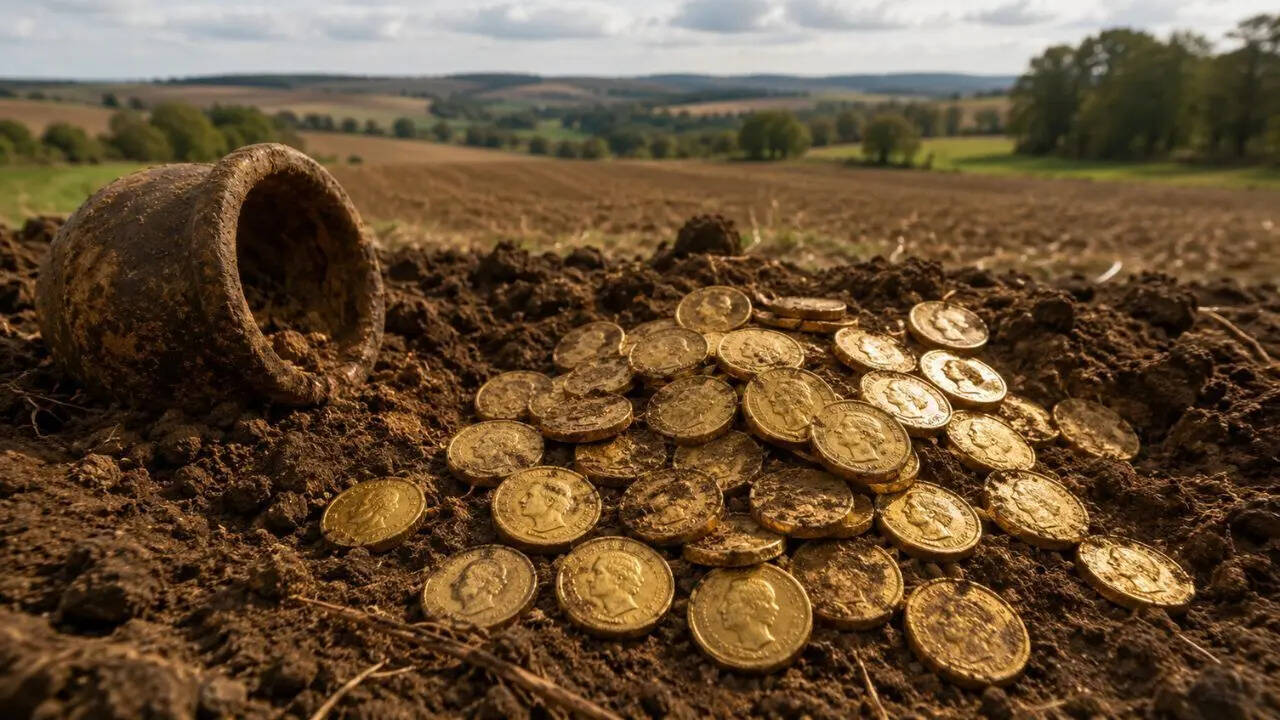
In a quiet field in northern Luxembourg, something glinted beneath the soil that did not belong to the present. At first, it looked like just another odd fragment of metal, easily overlooked in a landscape already layered with history. But what lay beneath the ground near Holzthum village soon began to suggest a far older story, one that reportedly stretches back to the final centuries of the Roman Empire. A hoard of Roman gold coins, untouched for around 1,700 years, has slowly reshaped how archaeologists view this corner of Europe. The discovery has drawn attention not because of sudden drama, but because of its strange stillness, as if it had been waiting through time for someone to notice.
According to Archaeology News, even now, the Roman gold coins found in Luxembourg continue to be studied and conserved. Their total value has been estimated at hundreds of thousands of euros, though experts suggest their historical importance far outweighs their monetary worth.