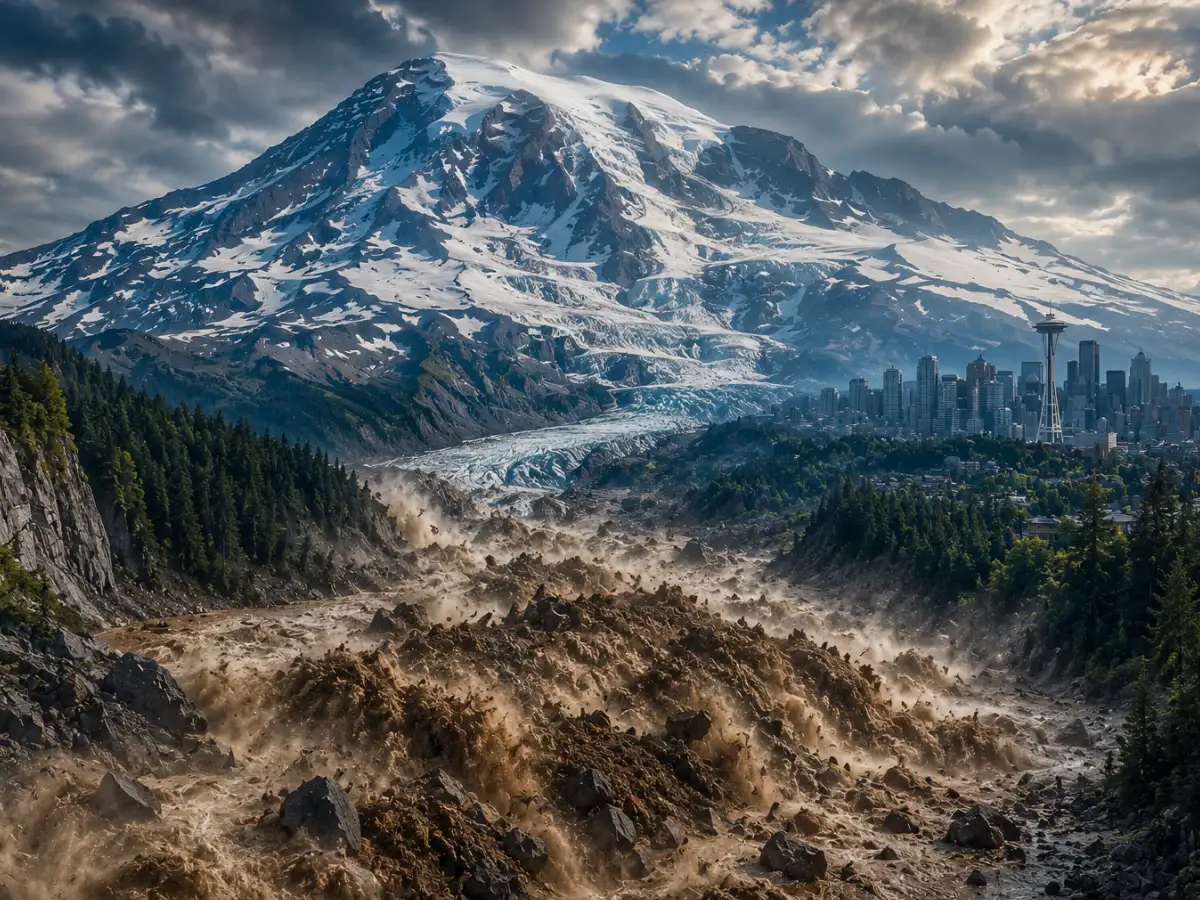
A catastrophic glacier collapse in Nepal has killed more than 350 people and left more than 1,000 missing, raising fresh questions about the dangers posed by unstable glaciers and rapidly moving mountain debris. Now, thousands of miles away, scientists have long warned that another heavily glaciated mountain could unleash a devastating disaster of its own — Mount Rainier in Washington state.
The 14,410-foot volcano towers over the Seattle-Tacoma metropolitan area, home to more than 3.3 million people. While there is no evidence that Mount Rainier is about to erupt, the mountain's enormous glacier cover and unstable volcanic slopes make it one of the most dangerous volcanoes in the United States.