Get all your news in one place.
100's of premium titles.
One app.
Start reading
The Independent UK
The Independent UK
Health
Liz Cookman

13.5 million children miss out on all vaccines as UN warns progress ‘too slow’ to meet immunisation targets

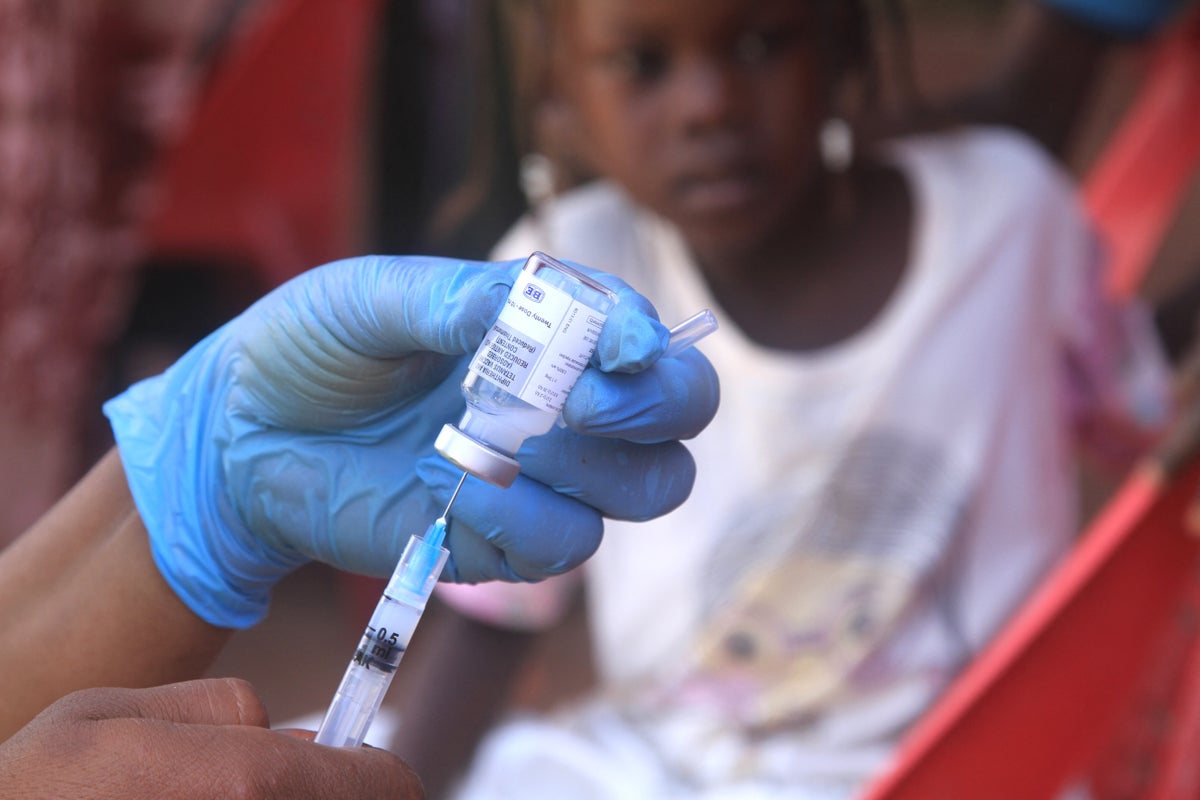
There were 13.5 million so-called “zero-dose” children in 2025, and more than half live in sub-Saharan Africa. - (AFP/Getty)

More than 13 million children missed all routine vaccinations last year, the UN has warned – saying progress towards immunisation targets is too slow and that recent gains could unravel as international aid cuts hit.

Last year, there were 13.5 million so-called "zero-dose" children, and more than half live in sub-Saharan Africa, with Nigeria accounting for the largest number globally.
The Democratic Republic of Congo, Yemen, Ethiopia and Angola were also among the ten worst-affected countries, estimates from the World Health Organization (WHO) and UNICEF show.

It is a sharp drop from the previous year, when 14.2 million children received no routine vaccinations, but remains higher than before the COVID-19 pandemic. It is also almost four million above the 2025 milestone needed to meet the global goal of halving the number of unvaccinated children by 2030.

"The pace of reduction is too slow to reach the goals by the end of the decade,” Dr Ephrem Lemango, UNICEF's Associate Director for Health and Global Chief of Immunization, told press during a press briefing.

"This is commendable progress, but it is still far from enough to reach every child with lifesaving vaccines.”

Despite the improvement, Dr Lemango said progress remained uneven. The report said 74 countries had more zero-dose children in 2025 than in 2019.

However, UNICEF warned that this level of coverage could be the best we ever see. The 2025 data sets also do not yet show the impact of international funding cuts as most vaccination programmes had already received their funding for the year when the cuts were announced.

Conflict remains one of the biggest barriers, continuing to leave millions beyond the reach of routine health services. More than half of the world's zero-dose children now live in fragile and conflict-affected settings, even though those countries account for only around a third of the world's births.

Yemen, where years of conflict have devastated the country’s health system, recorded the world’s lowest coverage for the first dose of the diphtheria, tetanus and pertussis (DTP1) vaccine.

Rapid population growth in many low-income African nations also means health services must vaccinate ever larger numbers of children simply to maintain existing coverage. Nigeria had the world's largest number of completely unvaccinated children, driven by both low immunisation coverage and one of the world's largest birth cohorts.

Yet Lemango pointed to Sudan, which recorded the largest improvement reported anywhere in the world last year, as evidence that progress is still possible even during war.

The UN also expressed concern about falling vaccination rates in some middle- and high-income countries, blaming governance challenges, declining political commitment and growing vaccine misinformation.The findings also come amid growing concern over the resurgence of measles. The report found that 97 countries experienced large or disruptive measles outbreaks during the past five years, and generally they had substantially lower routine immunisation coverage.

This article has been produced as part of The Independent’s Rethinking Global Aid project

Sign up to read this article
Read news from 100's of titles, curated specifically for you.
Already a member? Sign in here
Related Stories
Top stories on inkl right now
One subscription that gives you access to news from hundreds of sites
Already a member? Sign in here
Our Picks
Fourteen days free
Download the app
One app. One membership.
100+ trusted global sources.