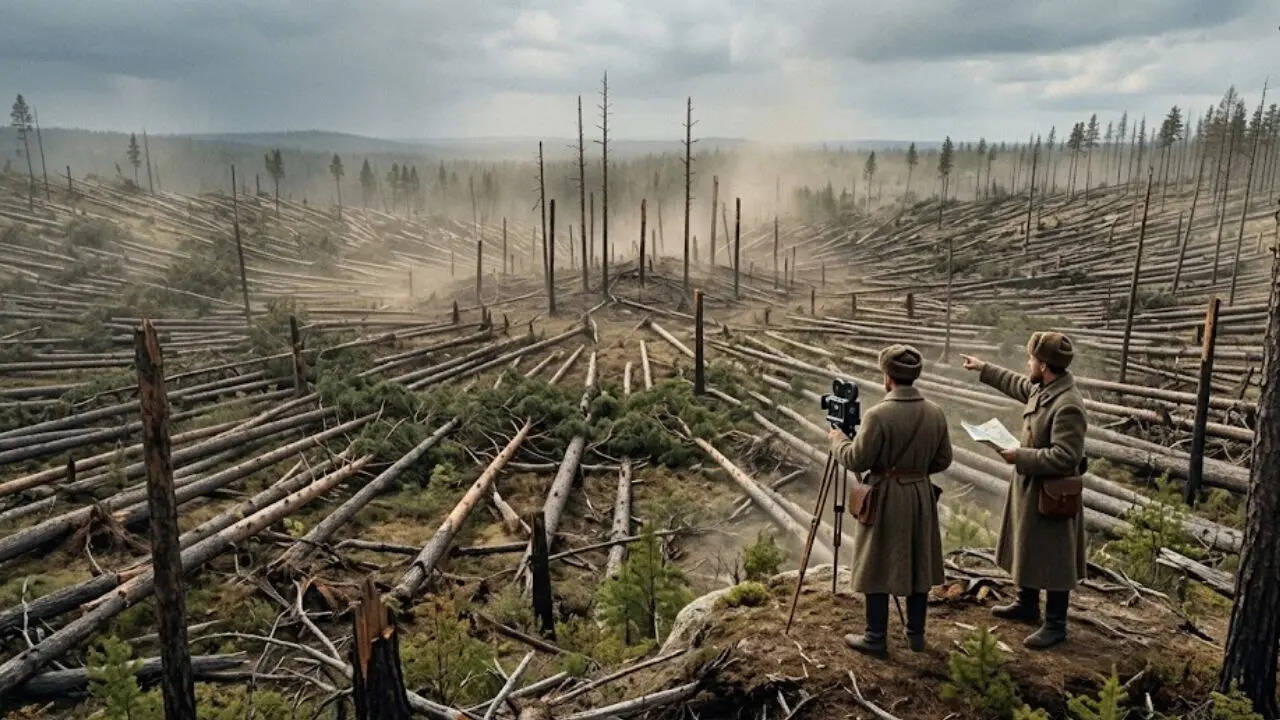
A tremendous explosion rocked the Tunguska region in Siberia in the early morning hours of June 30, 1908. The Tunguska explosion is the largest cosmic explosion experienced by humanity and resulted in all of the trees in an area of approximately 2,150 square kilometres being flattened by a blast wave of force similar to a large nuclear explosion. The fireball was described by witnesses as being like the sun and streaking across the sky with an intense brightness.
Although the force of the explosion released between 3-50 megatons of TNT, making it nearly a thousand times more powerful than the atomic weapon used at Hiroshima, all of the energy released during the explosion deposited directly into the atmosphere, at a height of about 5-10 kilometres, thus producing no visible impact crater and contributing to a lasting mystery that has challenged mankind's understanding of planet earth and planet impacting objects ever since. Scientists continue to analyze data to better understand these atmospheric airbursts, which remain critical for improving planetary defense and preparedness.