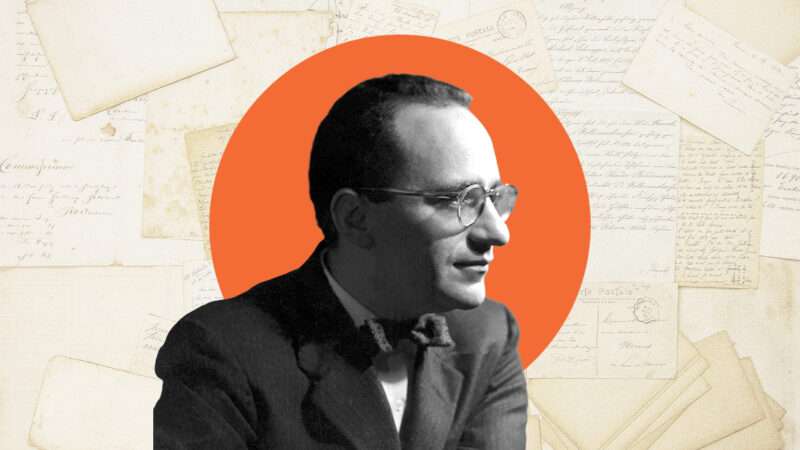
Today is the centennial of the birth of Murray Rothbard. While he was alive, Rothbard was the most significant direct influence both on a wide range of individual libertarian scholars and activists and on the major institutions that constituted the American libertarian movement in the second half of the 20th century. He was key to the functioning of the Volker Fund, the Institute for Humane Studies, the Libertarian Party, the Center for Libertarian Studies, the Cato Institute, and the Mises Institute.
Rothbard's intellectual goal was to forge a systematic approach to liberty, covering all the humane sciences—his particular specialties were economics, political philosophy, and history. He was a dedicated economics scholar and teacher, as well as a polemicist and movement builder. Most young libertarian writers and activists who arose from the 1950s through the '70s credit Rothbard as a key influence, both intellectual and personal. For a time in the 1960s, per movement lore, the American libertarian movement was both forged and contained in his New York City living room.