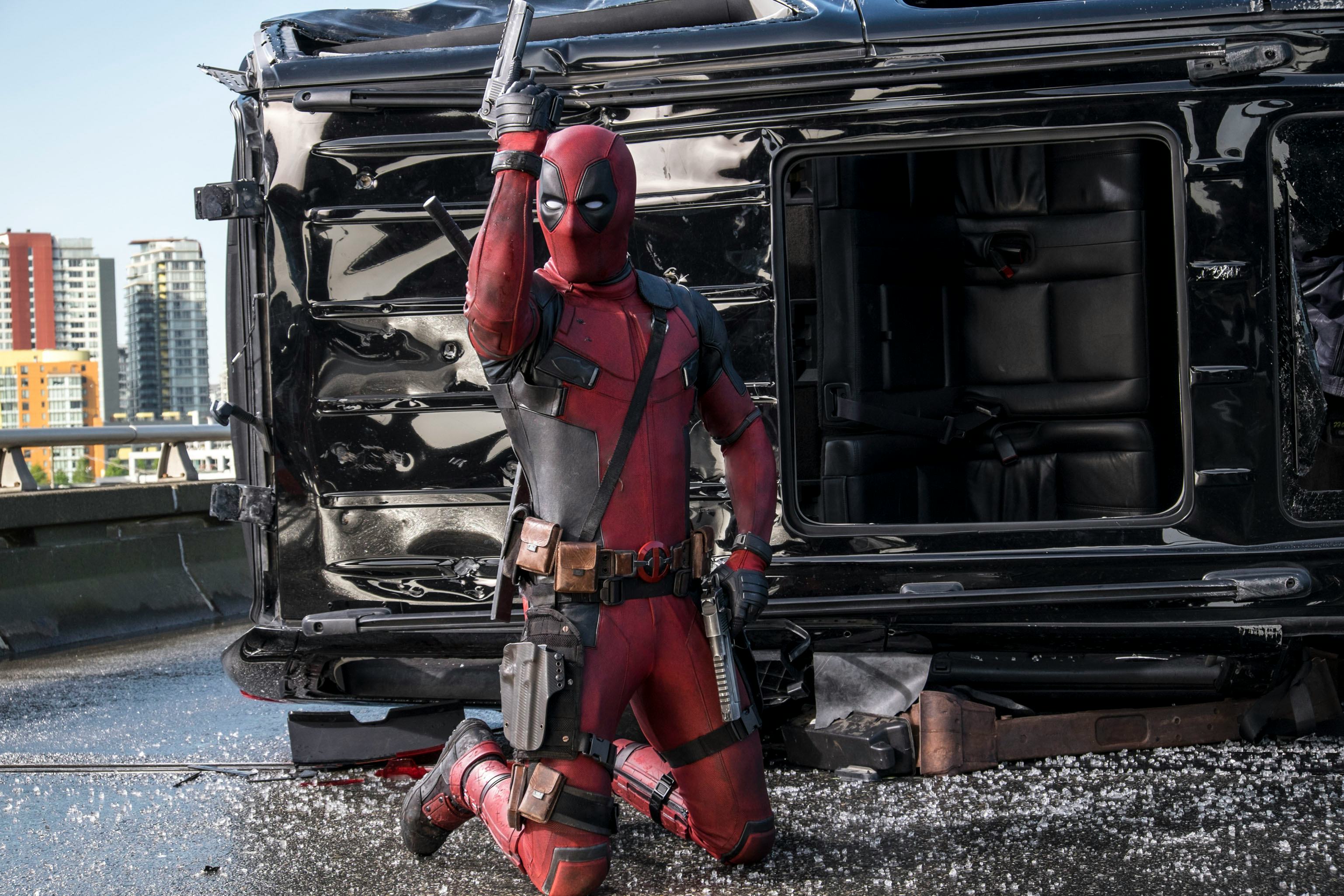
Superhero films had been the most dominant force in popular culture since the summer of 2008 saw the debut of both Iron Man and The Dark Knight, but the genre reached its apex eight years later. In 2016, every studio that had a stake in Marvel or DC properties attempted to broaden the scope of their universe in order to set up future installments: The year saw a clash of heroes in both Batman v. Superman: Dawn of Justice and Captain America: Civil War, there was also the introduction of Marvel’s mystical side in Doctor Strange, the expansion of the DCEU with Suicide Squad, and Fox’s most ambitious X-Men blockbuster with Apocalypse. By comparison, Deadpool was a scrappy, mid-budget experiment that had fought to get a greenlight, only to be dumped in the middle of February.
It’s ironic that Ryan Reynolds’ Deadpool has become the face of the Marvel Cinematic Universe, and that the snarky edge to the character is now the way in which nearly all action heroes operate. The original Deadpool wasn’t used as a gateway for bringing in legacy characters, and it wasn’t seen as a fan-serving project meant to win back public support for the humbled Marvel universe. The differences between Deadpool and Deadpool & Wolverine don’t just reflect the way that the genre changed over the course of the decade; the version of Wade Wilson that Reynolds crafted in 2016 simply isn’t the same one that’s rumored to be in Avengers: Doomsday. Tim Miller’s Deadpool may have hooked its audience with pop culture references and flashy ultra-violence, but it became a phenomenon because it was a surprisingly sincere underdog story.
Deadpool was infamously a film Reynolds was desperate to make after the character’s embarrassing debut in X-Men Origins: Wolverine, and one that only landed its relatively modest $75 million budget after positive responses to leaked test footage. The underdog nature of the film’s inception was baked into its premise; Wade is a former special forces officer with a heart of gold, and his decision to become a vigilante is marred by his surprisingly tragic experiences. The sarcastic sense-of-humor delivered by Reynolds is actually Wade’s means of coping with how life has kicked him to the curb, which has only incentivized him to do good. He’d pose as a pizza delivery guy to intimidate a creepy stalker, and he’d risk undergoing experimentation at the Angel Dust lab after being diagnosed with terminal cancer. Even then, Wade’s desire to extend his life isn’t because he’s called to fulfill his destiny, but because he’s finally found a woman who he wants to love and protect in Vanessa (Morena Baccarin).
The personal stakes of Deadpool are augmented by how well the film functions as a romantic-comedy. Although a clever marketing campaign framed it as the type of “cancer-adjacent romance” that Nicholas Sparks may have written, Deadpool’s flashback structure embraced the chemistry between Reynolds and Baccarin as the basis of the film’s conflict. Despite always having a quip or clever comment on his tongue, Wade has survived torture and disease because he finally found a similarly “lost soul” within Vanessa. That Deadpool himself is impenetrable by bullets and blades only means that he’s been subjected to more pain than any mortal could withstand within their lifetime.
The stricter parameters of what a film of Deadpool’s scale could achieve made its connections to the broader Marvel universe more effective. The recurring joke that Deadpool must “settle” for teaming up with the more obscure mutants Negasonic Teenage Warhead (Brianna Hildebrand) and Colossus (Stefan Kapičić) was much funnier in 2016, when the notion of him co-starring with Hugh Jackman seemed beyond the realm of possibility. Deadpool benefited from being on the edge of the universe, and not just because it could mock it from afar. When compared to the larger-than-life stakes seen in that year’s X-Men: Apocalypse, Deadpool was a story about relatable characters who were just trying to make ends meet.

It’s easy to forget in a post-Joker world that an R-rated comic book film was ever considered to be a risk, even if the juvenile tone of Deadpool made it perfect for teenagers. The R-rating felt like a novelty because it actually created more restrictions; since the budget didn’t allow for the type of explosive setpieces seen in the Deadpool sequels, the first film adopted a style of close-quarters, hand-to-hand combat and gunplay that had more in common with John Wick than it did with The Avengers. Although Wade frequently added fourth-wall breaking remarks to make these fight scenes more interesting, they broadly succeeded by having a tangibility that was lost in other superhero films.
Ryan Reynolds (the celebrity) has been so oversaturated that he has obscured the talents of Ryan Reynolds (the actor), who would have once taken a chance on risky independent projects like Mississippi Grind and Buried. Deadpool didn’t just benefit from the vulnerability Reynolds brought to the role, as he also contributed to the film’s cultural language. Prior to Stranger Things and the wave of ‘80s nostalgia that followed, the fact that Deadpool referenced Ferris Bueller’s Day Off, Cobra, and Juice Newton simply felt like a reflection of Reynolds’ personal interests.
Compared to the army of variants in Deadpool & Wolverine, the third-act battle of Deadpool, which takes place in a parking lost, feels more than a little modest. Since the first film’s character couldn’t adventure through the Multiverse and trade insults with Chris Evans, he settled for lampooning the confusing X-Men timeline and making fun of “Francis,” the real name of his abuser Ajax (Ed Skrein). Deadpool now has a wider audience than nearly any other comic book character, but he also has come to represent that establishment that Deadpool was rebelling against.