
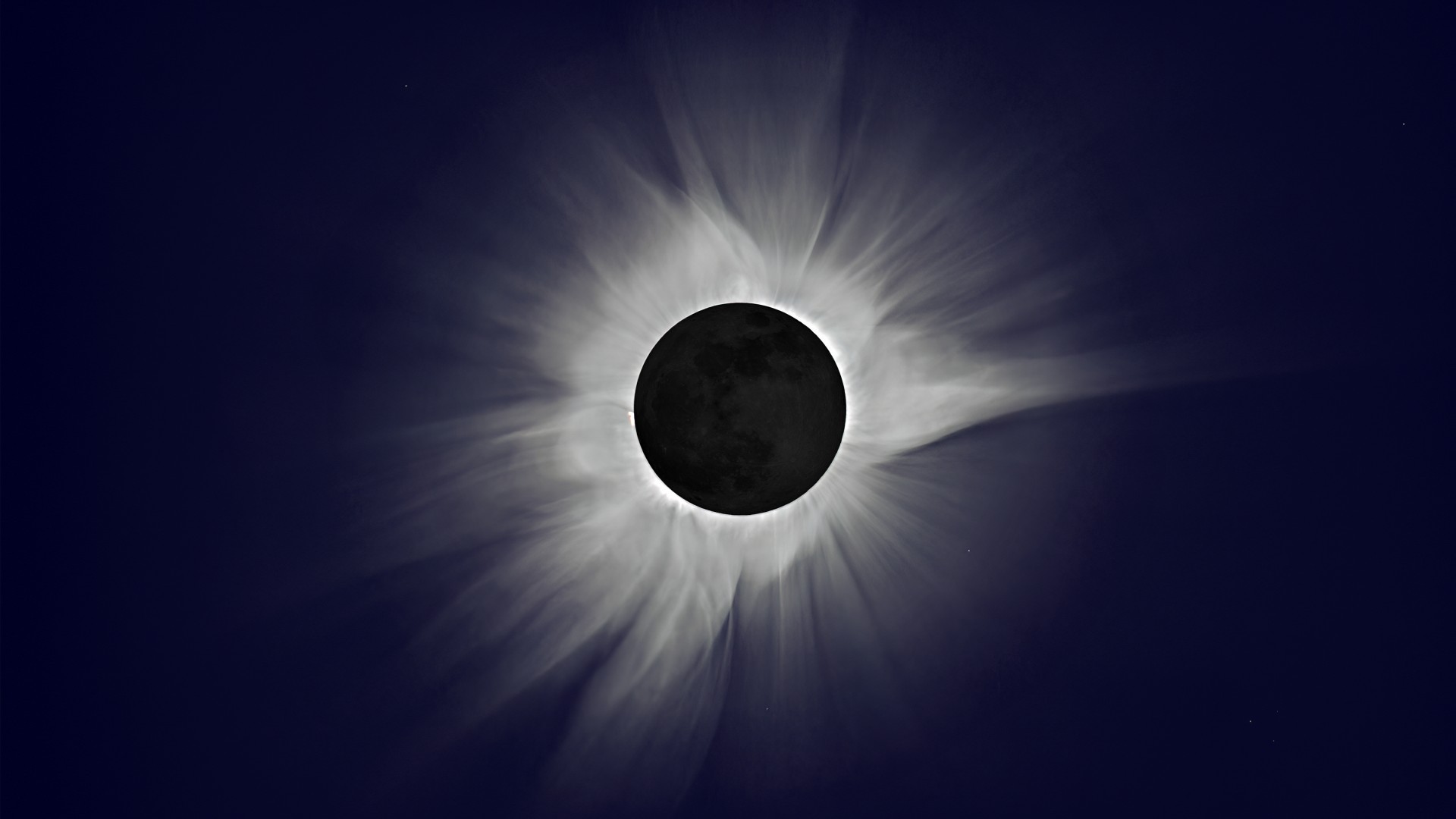
Unless you've been living under a space rock for the last few months, you’ll know that a total solar eclipse is coming soon to North America. On Monday, April 8, 2024, it will be possible to experience totality from parts of north-western Mexico, 15 U.S. states, and five Canadian provinces. During totality, the moon will block the sun’s light and heat for a few minutes, causing darkness in the day and a rare chance to see the solar corona with the naked eye.
However, a total solar eclipse is a dynamic event that can be complicated to understand. For example, totality is only on the menu for those within a narrow path stretching across North America. It’s only 115 miles wide. Everyone else in North America will see an under-whelming partial solar eclipse. But it also matters where you are within the path of totality. Then there's the weather forecast, too, because clear skies are essential to view the sun's corona during totality (though it will get dark wherever the weather).