
Get all your news in one place.
100's of premium titles.
One app.
Start reading
The Mary Sue
The Mary Sue
Sarah Fimm

10 Movie Characters Who Should Have Been Queer

Every film on this list is a triumph of cinema. A stunning blend of story, score, and cinematography that elevated movie-making to new artistic heights. While critics might call them the best films of all time, they could have been better… if only they had been gayer. From best friends who could have been something more to villains who are a little too obsessed with the heroes they supposedly hate, these are 10 movie characters who should have been queer.

Frodo and Sam — The Lord of the Rings

(New Line Cinema)

Let’s start with a classic, the greatest missed opportunity in an all-time great fantasy series. Peter Jackson’s The Lord of the Rings trilogy had all the necessary ingredients for a queer epic. Two twinks are tasked with throwing an evil piece of jewelry into a flaming pit, while hordes of burly orcs hunt them down. The queer subtext is palpable across the entire cast. Gandalf and Saruman’s bitter wizard rivalry fueled by unspoken gay yearning. Legolas and Gimli’s potential enemies-to-lovers romance on the field of battle. The gloriously genderbent antics of Éowyn. But the hottest fires of repressed queer desire burn near the summit of Mount Doom, when Samwise Gamgee whispers in Frodo’s ear about the taste of strawberries and then carries him on his back to complete their quest. Bilbo’s memoirs might call them friends, but the Fellowship of the Ring (and everyone else in Middle-earth) knows better.

Jebediah and Octavius — Night at the Museum

A cowboy and a centurion look up happily in Night at the Museum
(20th Century Fox)

Jebediah and Octavius are the enemies-to-lovers couple that never was. Comic relief characters in Shawn Levy’s Night at the Museum, these two diminutive warriors pass their time fighting when the Smithsonian comes alive after dark. After a bit of mediation by night watchman Larry, these once-bitter rivals turn into best friends… and potentially something more. Cowboys in cinema have been queer-coded for decades, and Roman centurions? It doesn’t take a history degree to know that classical antiquity was anything but heteronormative. Besides, these two sure spend a lot of time riding around together in Larry’s pocket. What are they doing down in there, nestled together in the dark? If audiences had seen, Night at the Museum could have lost its PG rating — and been an even better movie for it.

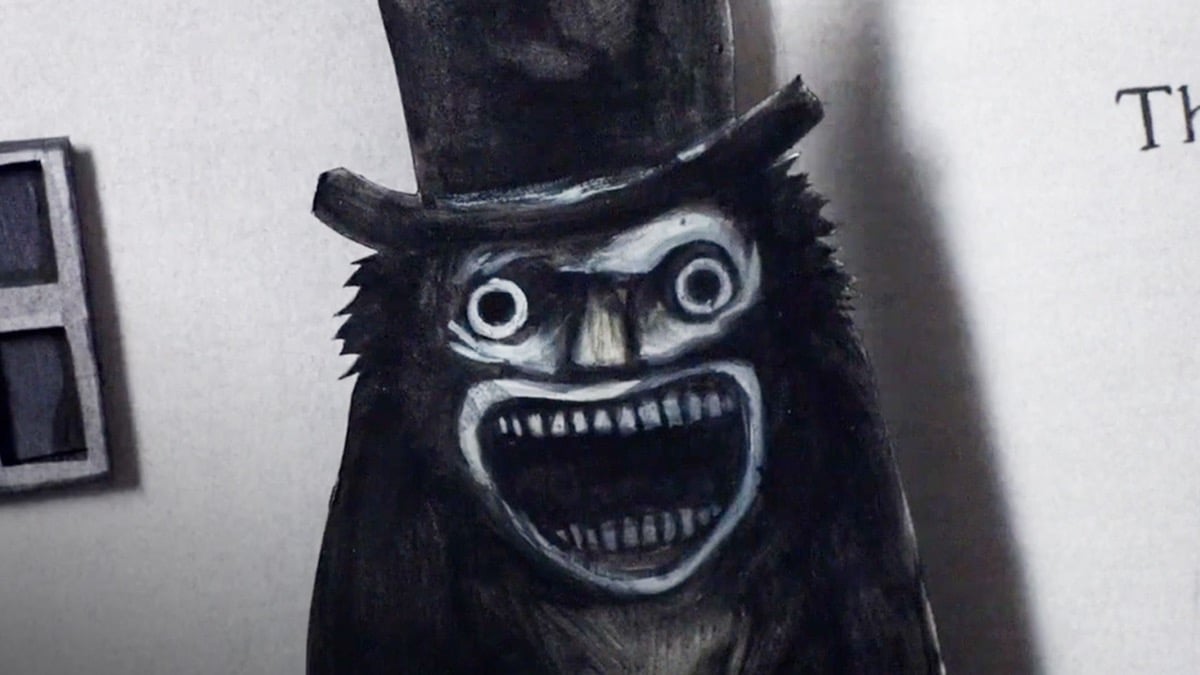
The Babadook — The Babadook

A creepy drawing of a topphat wearing ghost in The Babadook
(Umbrella Entertainment)

When Netflix accidentally listed Jennifer Kent’s The Babadook in its LGBTQ+ category, it ended up making queer history. Word of the tophatted antagonist’s sudden gayness spread like wildfire across the internet, inspiring a slew of memes canonizing Mr. Babadook as a queer icon. Upon a second watch of the film, Mr. Babadook’s queerness is hard to miss; his dapper attire and theatrically spooky antics feel like the pinnacle of creepy camp. One could even argue that queerness is an underlying theme in the film, the struggle of a heteronormative mother to accept a child whose inner world she doesn’t fully understand. The Babadook is either a visual representation of repressed emotions, or he’s just gay because why not? Either way, it makes for great cinema.

Everyone in Glengarry Glen Ross

A group of surly men stand in an office in Glengarry Glen Ross
(New Line Cinema)

The office atmosphere of James Foley’s Glengarry Glen Ross is insufferable, wafting from a toxically masculine group of real-estate salesmen all trying to assert their corporate dominance over one another. The proverbial dick-measuring contests are constant, endless comparisons of salaries and cars that spiral on without end. What these disgruntled office workers really need is to whip their actual johnsons out and blow off a little steam. All of their frustration could be solved if they stopped trying to screw each other over and just started screwing. Each man in the firm is constantly trying to assert his masculinity to the others, but what could be more manly than a bunch of men getting it on? Time-shares? Rolexes? BMWs? Guys, stop trying to impress each other with material things, and address those repressed inner desires instead — corporate America will be all the better for it.

Carrie White — Carrie

Sissy Spacek's Carrie drenched in blood during the prom scene.
(Metro-Goldwyn-Mayer)

A teenage outcast with a bible-thumping Christian mother, dealing with an inner rage that she doesn’t quite understand? Carrie White is such stuff as queer icons are made on. While many queer headcanons are often made for fun, Carrie‘s latent gayness feels deeply connected to the greater themes of the Brian De Palma film. A coming-of-age psychosexual nightmare by Stephen King, Carrie can easily be interpreted as an exploration of the struggles that queer teens face in conservative America. But unlike many ostracized queer teens in real life, this budding telekinetic has a psychic outlet for her inner turmoil. Carrie’s fiery retribution against her high school is the ultimate queer revenge fantasy, the result of deep-seated rage that could only be contained for so long.

The Seven Samurai — Seven Samurai

Seven samurai warriors stand on a hilltop looking over a field in "Seven Samurai"
(Toho)

Akira Kurosawa may have been one of the greatest directors in the history of cinema, but even he fell victim to missed opportunities for queerness. Seven Samurai could have been a gay opus, the story of a warrior polycule defending a community from marauding bandits. This almost-septouple was primed for queer greatness, a deeply bonded group of fighters willing to die by each other’s side. Sounds too good to be historically accurate? That’s where you’re wrong! Japanese history is filled with documentation of real-life gay samurai, as male-male intimacy was a culturally common practice. Pre-modern Japanese authors wrote countless works of literature about queer love, and it was often the subject of erotic works of ukiyo-e art. If only the Seven Samurai had such a print to commemorate their unspoken queerness. And who knows, maybe their bandit enemies could all have been gay too?

Agent Smith — The Matrix

A sunglasses wearing man stands with clones of himself in The Matrix
(Warner Bros.)

It’s no secret that The Wachowskis’ The Matrix franchise is a trans allegory, and the film was revolutionary in its depictions of queerness in mainstream media. Who doesn’t remember the cave orgy scene in The Matrix Reloaded, when all of humanity decided to collectively get down and dirty to the beat of some drums? While mankind is presented as unabashedly gay, their robotic overlords could have used a little queer zhuzhing as well. Agent Smith is the perfect candidate for an AI with repressed queer desire. According to his infamous monologue, he really hates human beings, comparing our species to a world-consuming virus. Could it be that he’s actually jealous of humanity’s unbridled expression of emotion and sexuality? Maybe that’s why he loathes Neo so much: long-repressed gay longing. Some call it the greatest sci-fi film of all time, but I call it a missed opportunity for the greatest enemies-to-lovers plot in sci-fi history.

King Kong — King Kong

Naomi Harris in King Kong (2005)
(Universal Pictures)

While the idea of a giant gay monkey climbing skyscrapers tickles my fancy, there’s a deeper argument to be made for why King Kong should be gay besides the inherent awesomeness. Kong is a relic of the ancient past, a living fossil from an unremembered era. Before humanity started imposing notions of right and wrong on the natural world, nature was wild, untamed, and actually quite queer. Homosexual behavior is well-documented in thousands of animal species, from mammals and birds to insects and fish. Had Kong fallen in love with one of the male filmmakers who landed on Skull Island, the romance would have been even more tender and tragic in that early 20th-century world. Like queerness itself, Kong was something that would never be accepted by mainstream society, and he was ultimately undone by humanity’s unwillingness to respect his existence. Peter Jackson’s King Kong was great; all that was missing was a gay great ape.

Billy and Stu — Scream

Two bloodcovered young men hold each other in Scream
(Dimension Films)

Wait. Billy and Stu aren’t gay? Then what was all the blood-soaked cuddling for? The twist antagonists of Kevin Williamson’s Scream, Billy and Stu are the queer villains who never were. C’mon. There’s no way these two are “just friends.” The hot and bothered way they hang on to each other is anything but platonic. Besides, what’s more romantic than hatching a murder plot with your lover? These lacerating loverbirds were actually based on Leopold and Loeb, two gay killers who made headlines in the 1920s. Actor Matthew Lillard has retroactively embraced his character Stu’s gayness, calling the pair “the first husbands of horror.” Alright, so everyone knew they were gay after all, but would it have killed them to kiss onscreen?

Thomasin — The Witch

anya taylor-joy as thomasin in the witch
(A24)

Robert Eggers’ coming-of-age folk horror film The Witches was an exploration of repressed female sexuality. If only that sexuality could have been canonically sapphic! A once puritanical teenager seduced by the pleasures of the flesh, Thomasin was never going to fit in with the rest of her Bible-thumping New England family. While Thomasin technically sells her soul to the devil, the film makes it clear that Hell was her family’s farmhouse all along. Why would anyone want to spend all day churning butter when they could be dancing naked in the woods with a bunch of other women? It sounds like a lesbian paradise. Yes, Black Phillip, I would like to live deliciously.

(featured image: Umbrella Entertainment)

Have a tip we should know? [email protected]

Sign up to read this article
Read news from 100's of titles, curated specifically for you.
Already a member? Sign in here
Related Stories
Top stories on inkl right now
One subscription that gives you access to news from hundreds of sites
Already a member? Sign in here
Our Picks
Fourteen days free
Download the app
One app. One membership.
100+ trusted global sources.