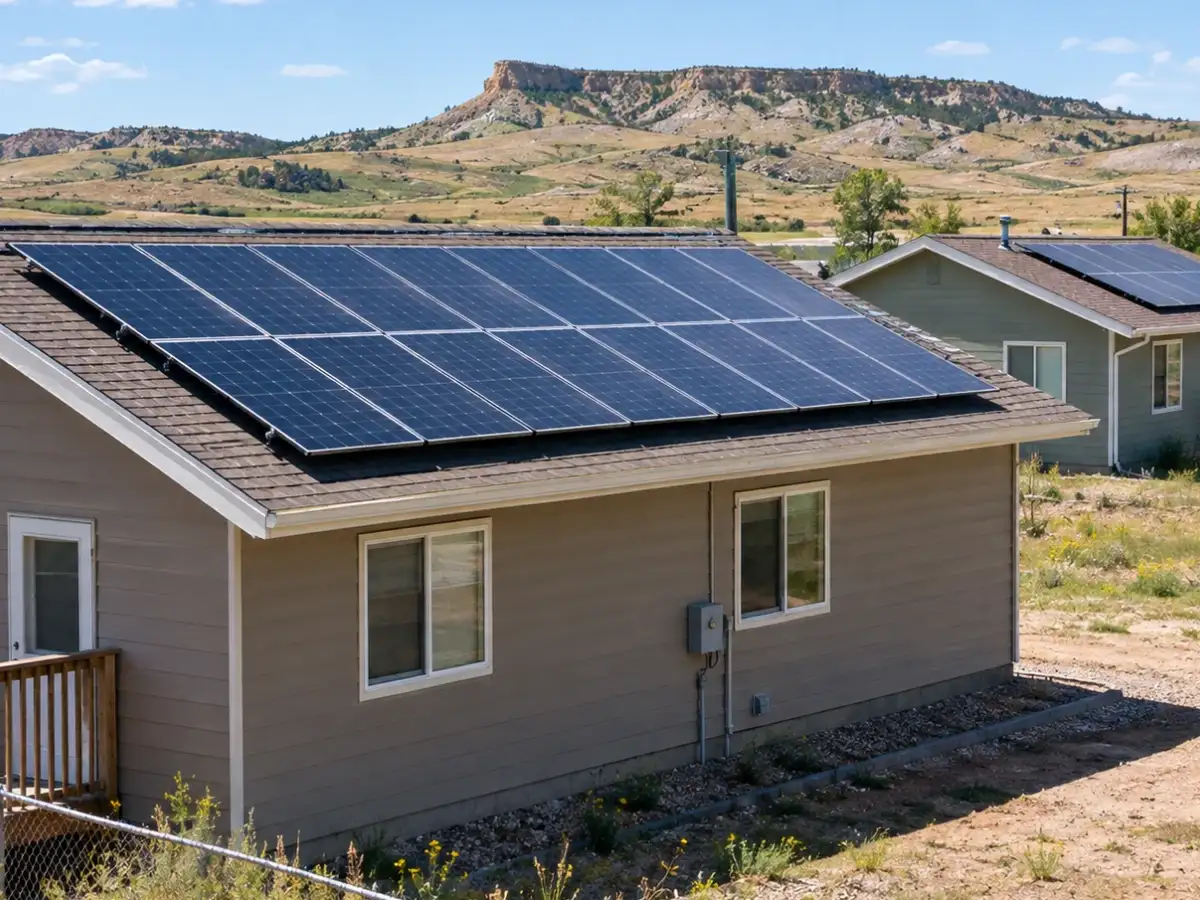
Ten families on the Rosebud Sioux Reservation in South Dakota didn't expect much from a rooftop solar project. All they wanted was cheaper power bills. But the panels did more than that, according to a project report from the Office of Indian Energy at the U.S. Department of Energy. In the first full year of use, the tribe’s housing authority saved $8,122 on electricity. That might not be a huge number in the sphere of national energy policy, but on a reservation where every dollar counts, the savings matter. This small-scale story shows how clean energy can quietly change lives for communities that have paid too much for power for too long.
A small project with big numbers

In 2016, the Rosebud Sioux Tribe installed 5.8-kilowatt solar systems on 10 income-qualified homes, aided by a federal grant. They are small rooftop systems, not massive solar farms. Local community members weren’t just witnesses to the installation. More than 28 people from the area spent more than 690 hours of hands-on training putting up the panels. By 2018, results were in. The 10 systems lowered total electricity use to 43,654 kilowatt-hours for the year. That decrease resulted in $8,122 in savings for Sicangu Wicoti Awanyakapi, the tribe’s housing authority that pays the electric bills for these homes. The families didn’t have to change their lifestyles or cut back on heating and cooling. The panels simply did the work behind the scenes. The project was successful enough that the tribe used it as a launchpad. A follow-up project installed a larger, 149-kilowatt community solar system and rooftop panels on 13 additional homes to try to offset half or more of the area’s electric bill going forward.