A U.S. official focusing on arms control on Monday provided what he called new, declassified details of a Chinese underground nuclear test nearly six years ago and urged countries to press China and Russia to do more on nuclear disarmament.
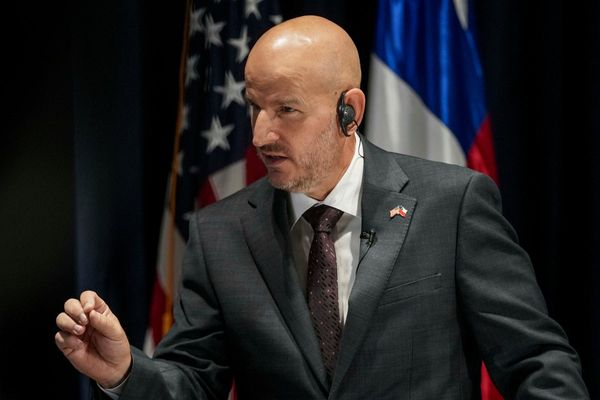
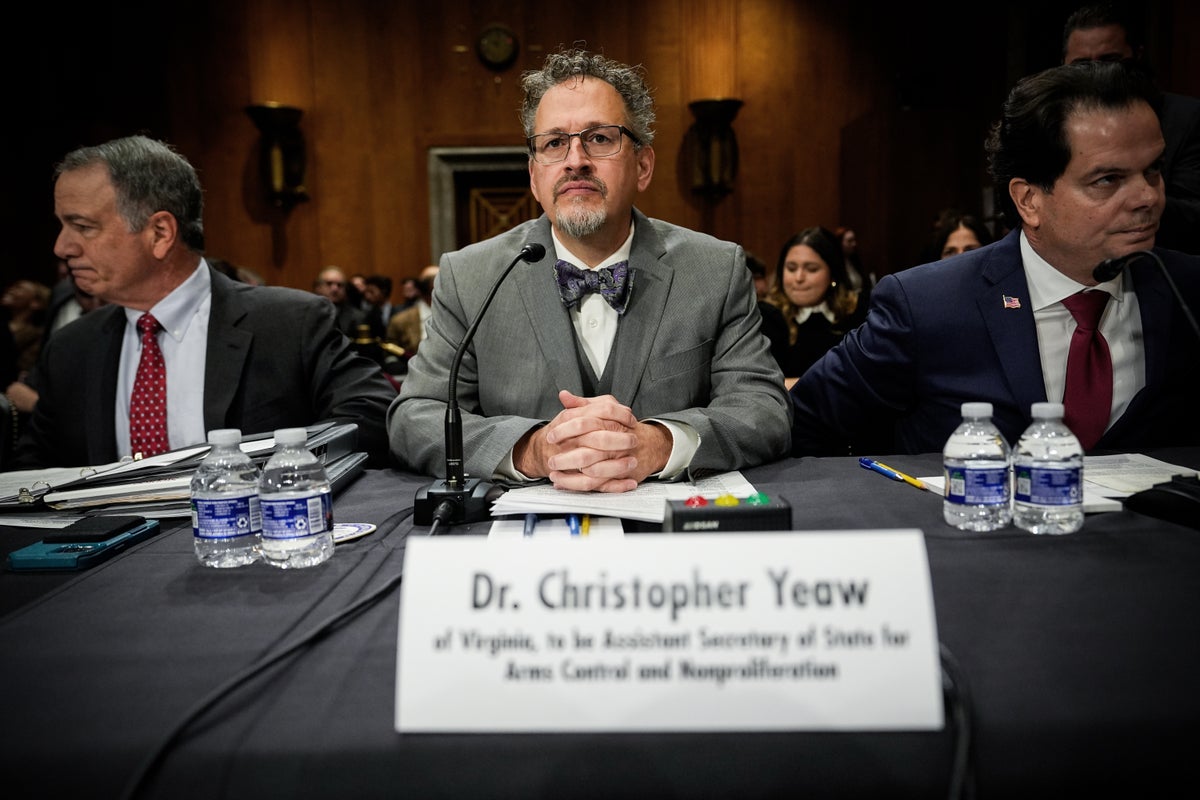
Christopher Yeaw, assistant secretary of state for the bureau of arms control and nonproliferation, spoke to a U.N.-backed body after the last nuclear arms pact between the United States and Russia expired this month. That has ended limits on the arsenals of the world’s biggest nuclear powers and raised concerns about a possible new arms race.
Yeaw called for greater transparency from China and pointed to some shortcomings of the New START treaty, such as that it didn't address Russia's large arsenal of nonstrategic nuclear weapons — which counts up to 2,000 warheads.
“But perhaps its greatest flaw was that New START did not account for the unprecedented, deliberate, rapid and opaque nuclear weapons buildup by China,” he told the U.N.-backed Conference on Disarmament.
Yeaw said Beijing “has deliberately, and without constraint, massively expanded its nuclear arsenal” despite its assurances to the contrary. He lamented a lack of transparency about China's “endpoint” or goals.
“We believe China may achieve parity within the next four or five years,” he said.
Beijing has balked at any restrictions on its smaller but growing nuclear arsenal and denies carrying out such a nuclear test.
Yeaw met Monday with a Russian delegation and was to meet with Chinese and other delegations Tuesday in Geneva. U.S. officials have already held repeated meetings with partners, including nuclear-armed France and Britain.
In his speech, Yeaw cited an explosion detected at the Lop Nur underground site in western China as a magnitude 2.75 seismic event on June 22, 2020, based on information collected from an international monitoring system station in neighboring Kazakhstan.
“It was a probable explosion based upon comparisons between historic explosions and earthquakes,” he said. “The seismic signals were indicative of a single fire explosion, not typical of mining explosions.”
Yeaw said China has made it “difficult” for the international community to monitor its testing activities and that during talks, it rejected allowing seismic testing stations to be put at a comparable distance to Lop Nur that the U.S. allows near its test site in Nevada.
China's ambassador to the conference said Monday that Beijing “resolutely rejects the unfounded accusations” by the U.S. and lashed out at “continued distortion and smearing of China’s nuclear policy by certain countries.”
“The U.S. accusation that China conducted a nuclear explosion test is completely unfounded and is merely a pretext for resuming its own nuclear testing,” Ambassador Jian Shen said. “The U.S.’s practice of smearing other countries to evade international arms control obligations seriously damages its own international standing.”
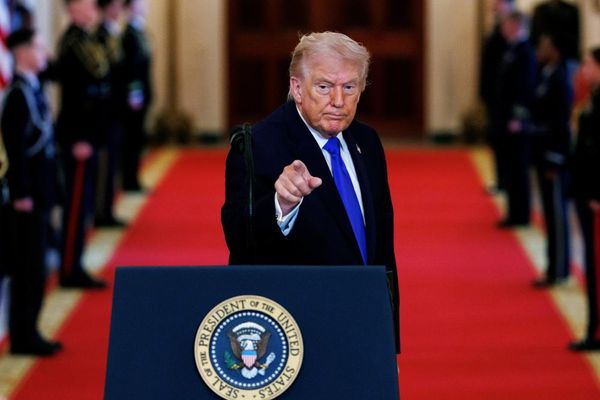
President Donald Trump in October pointed to U.S. intentions to resume nuclear tests for the first time since 1992, but Energy Secretary Chris Wright later said such tests would not include nuclear explosions.
In his first term, Trump tried and failed to push for a three-way nuclear pact involving China.
Just after the New START pact expired, Secretary of State Marco Rubio said the U.S. was “pursuing all avenues” to fulfill Trump’s “desire for a world with fewer of these awful weapons,” but insisted Washington would not stand still while Russia and China expand their nuclear forces.
“Since 2020, China has increased its nuclear weapons stockpile from the low 200s to more than 600 and is on pace to have more than 1,000 warheads by 2030,” Rubio wrote on Substack this month.
The U.S. has expressed a willingness to pursue multiple diplomatic avenues over the issue — whether bilateral, in a small group of countries or in broader multilateral talks.
“We are looking to all of you to help encourage nuclear-weapon states like China and Russia to engage meaningfully in a multilateral process,” Yeam told the conference, which brings together some 65 countries on issues like nuclear, biological and chemical weapons.
Shen said China has consistently supported the goals of the Comprehensive Nuclear Test Ban Treaty, “always adhered” to the commitments of the five nuclear weapons states to suspend nuclear testing and “never” engaged in activities that violate the treaty.
He also suggested Beijing, which has been on a vigorous military buildup in recent years, still has fewer nuclear weapons than the U.S. or Russia and said it was “unfair, unreasonable and unfeasible” to demand China engage in three-way nuclear arms control talks.
“China’s nuclear arsenal is not on the same scale as the country with the largest nuclear arsenal, and the strategic security environment faced by China’s nuclear policy is completely different from that of the U.S.,” Shen said.
___
Associated Press writer Didi Tang in Washington contributed to this report.
From Labour ‘Prince’ to Epstein shame: How Lord Mandelson fell from grace
Who is Peter Mandelson and what do we know about his relationship with Epstein?
France moves to bar US Ambassador Charles Kushner from direct government access
Ukraine war in numbers: Bleak toll of Putin’s invasion after four devastating years
Slovakia halts emergency electricity supplies to Ukraine amid oil delivery dispute
Ukraine has shown what it can do to survive – this is what it needs to win