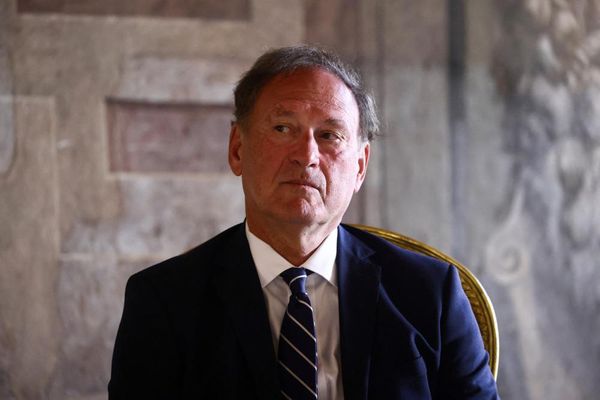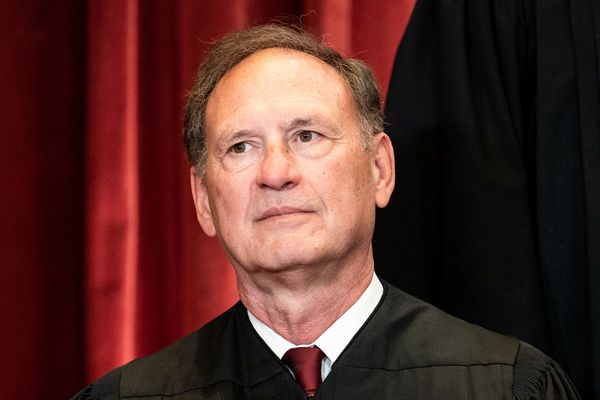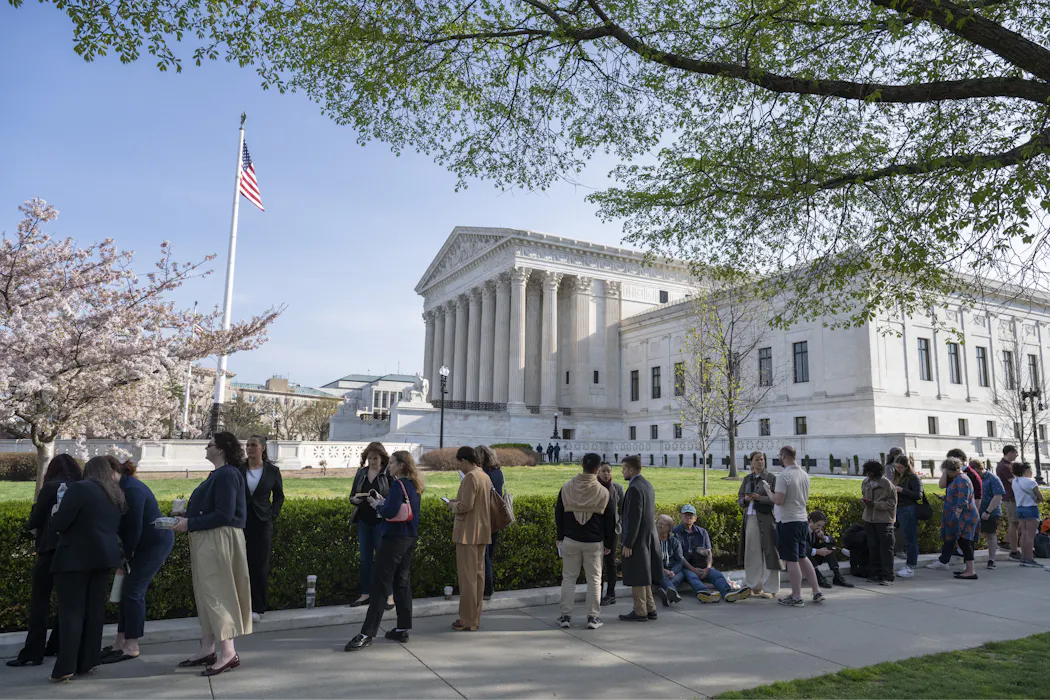
In an 8-1 decision authored by Justice Neil Gorsuch, the Supreme Court held on March 31, 2026, that a Colorado law prohibiting licensed counselors from performing “conversion therapy” on minors was likely unconstitutional as applied to talk therapy. Justice Elena Kagan filed a separate concurrence, joined by Justice Sonia Sotomayor. Justice Ketanji Brown Jackson dissented.
I am a law professor and political scientist who teaches and writes on free expression and discrimination. I see this holding as a potentially important decision at the intersection of free speech and health care.
Colorado’s law defines conversion therapy broadly. It bans practices that attempt not only to “change an individual’s sexual orientation or gender identity” but also to reduce same-sex attraction. The law allows therapists to provide “acceptance, support, and understanding” of gay or transgender identity. However, they may not help a client suppress those identities. Penalties include fines, probation and loss of license.
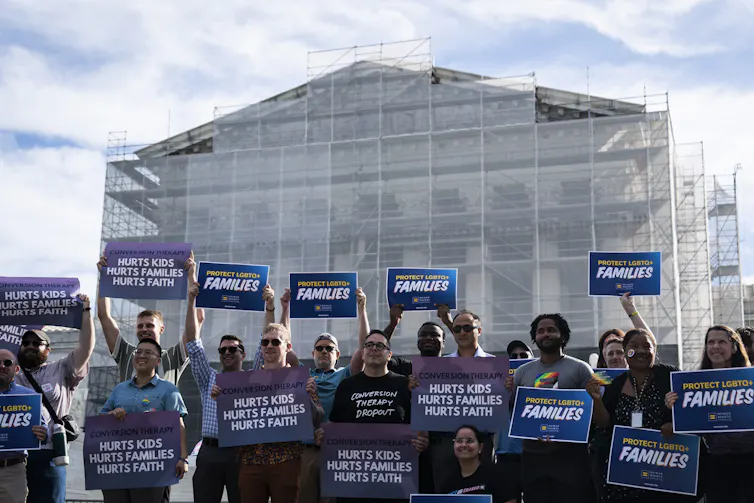
Kaley Chiles challenged the law as a violation of her First Amendment free speech rights. As a therapist who only offers talk therapy, Chiles’s objection was limited to her talk therapy. She didn’t contest the ban on what she called “long-abandoned, aversive” conversion practices. And – notably, considering she is an evangelical Christian – Chiles said she never set out to convert her clients. She says she respects her clients’ “fundamental right of self-determination” and determines her therapy approach only after a client identifies his or her own objectives. But she argued that some of her clients wish to “reduce or eliminate unwanted sexual attractions (or) change sexual behaviors,” and the law prevents her from expressing support for any of those goals.
Colorado’s failed ‘professional speech’ argument
Colorado faced a major obstacle in defending the Colorado conversion therapy law. The law was transparently driven by the government’s views about the well-documented inefficacy and harmful effects of conversion therapy. And outside of certain contexts, such as government grants, public employees, advertising and threats, courts have treated such viewpoint-based laws as constitutionally dead on arrival.
Colorado’s best hope in defending the law, then, was to argue that it wasn’t principally a restriction on speech at all. Rather, the state framed the law as a restriction on professional conduct — an area where states have broad regulatory latitude. That framing would mean the law burdened Chiles’ speech only incidentally.
In NIFLA v. Becerra, decided in 2018, the court rejected the argument that professional speech was a less-protected category. But it acknowledged that laws “regulating conduct in ways that incidentally sweep in speech” – particularly where they “fall within the traditional purview of state regulation of professional conduct” – might survive under a lower standard of scrutiny.
Colorado attempted to demonstrate such a tradition here, citing medical licensing laws, informed-consent requirements and malpractice liability.
A divided 10th U.S. Circuit Court of Appeals had agreed with Colorado’s argument, as did Jackson in her dissent. But the Supreme Court majority rejected it. Gorsuch wrote that a government cannot evade First Amendment scrutiny by relabeling restricted speech as “conduct,” “treatment” or a “therapeutic modality.” Quoting the dissent of U.S. Circuit Judge Harris Hartz, he called Colorado’s argument a “labeling game.”
For Gorsuch, the key question is whether the law restricts speech in practice. And in Chiles’ case the answer was yes. Colorado was plainly restricting what she wished to tell her clients about their sex and gender issues.
Not just content but viewpoint discrimination
More than that, the majority noted, Colorado’s law doesn’t regulate therapists’ speech based on its content. The law discriminates based on viewpoint, permitting expressions of acceptance and support for a client’s self-identity while forbidding expressions that attempt to change it.
Under 1995’s Rosenberger v. University of Virginia, viewpoint discrimination is an “egregious form” of content regulation. Governments must “nearly always abstain” from it. The court remanded the Colorado case back to the 10th Circuit to resolve the case under this standard.
Jackson’s dissent: Medical treatment, not speech
Jackson’s solo dissent emphasizes that states have long enjoyed broad power to regulate how licensed medical professionals treat patients. To Jackson, the First Amendment should not interfere simply because a treatment is applied through words rather than instruments.
The court’s 2018 NIFLA decision, she argues, distinguished between speech restricted “as speech” and speech restricted “incidentally” as part of a medical treatment the state is otherwise entitled to regulate. According to Jackson, the majority arbitrarily collapses that distinction simply because the treatment is delivered orally. A talk therapy session and a drug infusion are both medical treatments, she argues, and the analysis should not turn on whether the provider uses a syringe or a sentence.
Jackson’s dissent also raises difficult line-drawing problems, such as the validity of less controversial potential prohibitions, such as those on encouraging a patient to smoke or to take their own life.
Implications are broader, narrower than most believe
First, only talk therapy is implicated.
The holding is narrow in this sense. It leaves room for policymakers still hoping to limit the practice of conversion therapy. Because Chiles challenged the statute only as applied to her, the majority’s analysis does not invalidate conversion therapy bans wholesale – neither Colorado’s nor those of more than 20 other states – but applies only to the extent they ban conversion talk therapy.
State legislatures can define conversion therapy a bit more narrowly, for example, by prohibiting the physical and more coercive techniques that initially gave rise to these bans. States can then leave the regulation of talk therapy to other legal and professional mechanisms, such as malpractice or enforcement of professional ethics.
Second, the standard of scrutiny that the lower court must now apply is not strict scrutiny; it is more demanding. Strict scrutiny is a legal test that validates a law if it is “narrowly tailored to achieve a compelling government interest.” Contrary to what some legal commentators have implied, Gorsuch never directs the lower court to use strict scrutiny.
The opinion emphasizes that the law doesn’t just discriminate against certain types of content – a trigger for strict scrutiny; it discriminates based on viewpoint. The strict scrutiny standard is demanding, but laws sometimes survive it. Viewpoint discrimination, on the other hand, is subject to a near-absolute prohibition: Governments must “nearly always abstain” from it. This language is stronger and more categorical than that for strict scrutiny. The implication is that the law should certainly be invalidated as applied to talk therapy.
Not a clear win for conservatives
Finally, the holding is a double-edged sword for conservatives with traditional views of gender identity. And for those discouraged by the outcome, seeing it only as a victory for religious conservatives, the holding’s logic offers a silver lining.
Kagan’s concurrence makes explicit that a “mirror image” law – one barring talk therapy that affirms gender identity – would raise the same constitutional problems.
The majority makes a similar point. As late as the 1970s, the American Psychiatric Association still classified homosexuality as a mental disorder. Under Colorado’s position, a law from that era prohibiting counselors from affirming gay clients’ identities would have been constitutionally sound.
Today, more than 20 states have moved to restrict gender-affirming care, and the federal government is pressuring state medical boards to adopt skeptical positions on gender transition. It’s not implausible that a legislature would attempt to ban gender-affirming, talk-based therapies. If and when conservative policymakers attempt that move, Chiles will be a formidable obstacle.
Read more of our stories about Colorado.

Kevin Cope does not work for, consult, own shares in or receive funding from any company or organization that would benefit from this article, and has disclosed no relevant affiliations beyond their academic appointment.
This article was originally published on The Conversation. Read the original article.