Few weeks pack as much consequence as the one that closes out June. A natural disaster, a landmark court decision, a sporting milestone, a wobbling peace deal and a battlefield escalation all unfolded in parallel. Here is what happened, and why each story matters.
1. Twin earthquakes devastate Venezuela
On the evening of June 24, two powerful strike-slip earthquakes struck northern Venezuela roughly 39 seconds apart — a magnitude-7.2 foreshock followed by a magnitude-7.5 mainshock, both centred near Yumare on the Caribbean coast, west of Caracas. Seismologists labelled the rare back-to-back event a "doublet," and the U.S. Geological Survey noted it was the strongest tremor to hit the country in more than a century, since 1900.

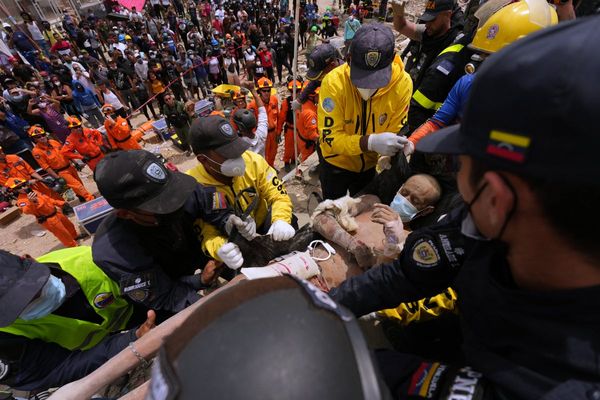
The destruction spread across Caracas, La Guaira, Carabobo, Aragua, Miranda and Trujillo, with the coastal state of La Guaira — where authorities said more than 1,400 buildings came down — declared an outright disaster zone by acting President Delcy Rodríguez. Caracas's main gateway, Simón Bolívar International Airport, was badly damaged and closed.
As of June 26, National Assembly President Jorge Rodríguez put the official toll at 920 dead and 3,360 injured, with scores still trapped. Later tallies ran higher — some compilations cited roughly 1,430 fatalities and more than 3,200 injured — and USGS modelling warned the final figure could reach the thousands. The number of missing is where accounts diverge most sharply: the government has spoken only of hundreds unaccounted for, yet the United Nations' humanitarian chief estimated more than 50,000, and an independent tracking site listed nearly 68,900. Among the dead were nationals of Brazil, China, Italy, Spain and Portugal.
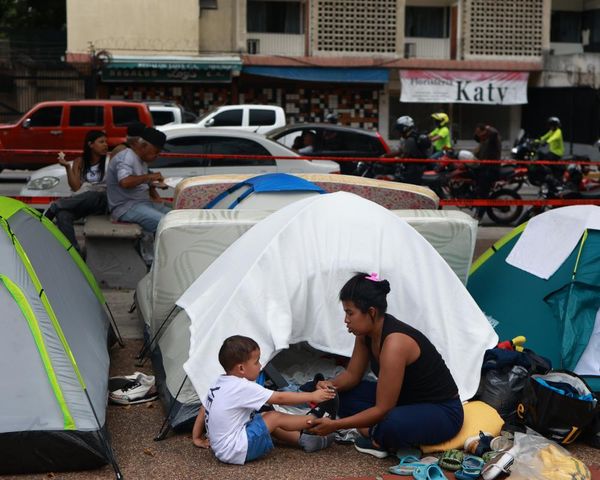
The response exposed a country already in crisis. With heavy machinery scarce, residents of La Guaira clawed through collapsed apartment blocks by hand, and hospitals treated the wounded outdoors. International help poured in: Washington pledged $150 million in aid and dispatched elite urban search-and-rescue teams from Fairfax County, Virginia, and Los Angeles County, while Mexico and Spain sent rescuers, engineers and canine units. The U.N. estimated economic damage at between $4.7 billion and $8.7 billion — a striking figure given that U.S. forces had seized then-President Nicolás Maduro from Caracas just months earlier.
2. Supreme Court clears the way to end TPS for Haiti and Syria
On June 25, the U.S. Supreme Court ruled 6–3 in Mullin v. Doe (decided alongside Trump v. Miot) that the Department of Homeland Security may terminate Temporary Protected Status for Haiti and Syria. Writing for the majority, Justice Samuel Alito held that the governing statute broadly bars courts from second-guessing the homeland security secretary's determinations about which countries qualify.

The decision lifts lower-court orders that had paused terminations first announced in 2025 by then-Secretary Kristi Noem, who certified that conditions in both countries had improved enough for people to return. It clears protections for about 350,000 Haitians and roughly 6,000 Syrians, with work authorization expected to lapse around July 1. Immigration lawyers cautioned that the underlying logic — sharply limiting judicial review — threatens others among the roughly 1.3 million TPS holders from more than a dozen nations.
In a dissent joined by Justices Sotomayor and Jackson, Justice Elena Kagan argued the beneficiaries sought only to remain while litigating and warned that sending them home risked life-threatening harm; she also rebuked the majority for sidestepping racially charged presidential remarks. Notably, the State Department still lists both countries as "do not travel" destinations. The White House called the outcome a vindication of the program's temporary nature.
3. The World Cup group stage ends — and the final 32 are set

The first 48-team World Cup, co-hosted by the United States, Mexico and Canada, completed its group stage on June 27, and the newly introduced Round of 32 — running June 28 to July 3 — is fully populated by the 12 group winners, 12 runners-up and the eight best third-placed sides.
There was no shortage of drama. Cape Verde, in its tournament debut, became the smallest nation ever to reach a World Cup knockout round and drew Lionel Messi's Argentina, while South Africa edged through for the first time. Long-fancied sides Uruguay and Saudi Arabia went out, and Scotland and South Korea were squeezed out of the third-place race. The confirmed Round of 32 matchups:
- South Africa vs. Canada
- Brazil vs. Japan
- Germany vs. Paraguay
- Netherlands vs. Morocco
- Ivory Coast vs. Norway
- France vs. Sweden
- Mexico vs. Ecuador
- England vs. DR Congo
- Belgium vs. Senegal
- United States vs. Bosnia and Herzegovina
- Spain vs. Austria
- Switzerland vs. Algeria
- Portugal vs. Croatia
- Australia vs. Egypt
- Argentina vs. Cape Verde
- Colombia vs. Ghana
The 16 nations sent home at the group stage were South Korea, Czechia, Qatar, Scotland, Haiti, Türkiye, Curaçao, Tunisia, New Zealand, Iran, Saudi Arabia, Uruguay, Iraq, Jordan, Uzbekistan and Panama.
4. The U.S.–Iran nuclear pact is tested in public
A week after signing an interim, 14-point memorandum of understanding to wind down their months-long war, Washington and Tehran spent the period bickering openly over what the document actually requires. The flashpoint was inspections: IAEA chief Rafael Grossi insisted that the accord explicitly puts Iran's nuclear facilities under agency supervision and that visits "[will] happen," while a senior Iranian official countered that any inspection of enrichment sites hinged on reaching a final agreement and the lifting of sanctions.
The MoU commits Iran to diluting its highly enriched uranium stockpile, waives U.S.-backed sanctions on Iranian oil, reopens the Strait of Hormuz toll-free for at least 60 days, and unfreezes billions in Iranian assets — money the Trump administration wants steered toward American crops and medicine. The IAEA had been locked out of Iran's enrichment sites since Israel's 12-day war on the country in 2025, and nonproliferation experts fear Tehran may be relocating material believed sufficient for up to 10 weapons. With talks set to resume and the Lebanon ceasefire between Israel and Hezbollah repeatedly strained, the deal's durability remains an open question.
5. Ukraine launches one of its largest drone barrages on Russia

Overnight into June 26, Ukraine sent a massive wave of drones deep into Russian territory. Russia's Defence Ministry said it intercepted 660 Ukrainian drones across 12 regions, plus Russian-held Crimea and the Black and Azov seas — among the biggest such assaults since the 2022 invasion. Kyiv's security service said it struck navy vessels and air-defence radars at the Crimean port of Kerch, claiming a large fire, though the report could not be independently confirmed.
The raid followed President Volodymyr Zelenskyy's announcement of a "40-day influence operation" intended to press Moscow toward ending the war, part of a sustained campaign targeting Russian oil and energy infrastructure to squeeze the Kremlin's war chest. Russia hit back, though Ukraine's air force said it downed 174 of 189 incoming drones; four of seven Iskander-M ballistic missiles broke through, damaging energy sites and homes in Kyiv, Odesa, Zaporizhzhia and Sumy, and wounding at least six people. The renewed tempo came as the Trump administration signalled fresh, if uncertain, interest in re-engaging on Ukraine now that its Iran ceasefire is in place.