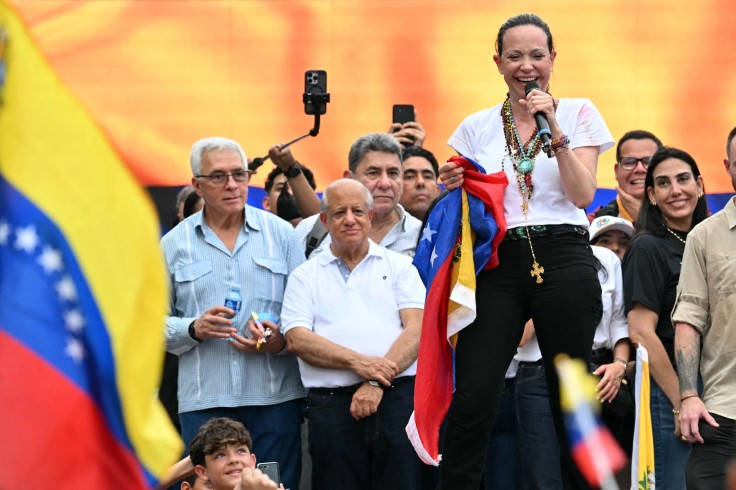
She spent eleven months hiding somewhere inside Venezuela, slipped out of the country in December to accept the Nobel Peace Prize in Oslo — which she then dedicated to Donald Trump — and has since been working from a modest office in Washington, D.C., building what she calls an "unstoppable" coalition for democratic transition. Now, María Corina Machado has formally announced she will return to Venezuela before the end of 2026, that she will run for president again, and that the only acceptable outcome for her country is a free and fair election in which all Venezuelans — including the more than 7 million who have fled abroad — get to vote.
The announcement, made at a press conference in Panama City on May 23, was the most significant political statement Machado has made since Nicolás Maduro was captured by U.S. forces on January 3. It was also, in many ways, a declaration of independence from the Trump administration's timeline — which has notably not committed to elections happening anytime soon.
What Machado Is Saying — and What She Is Doing
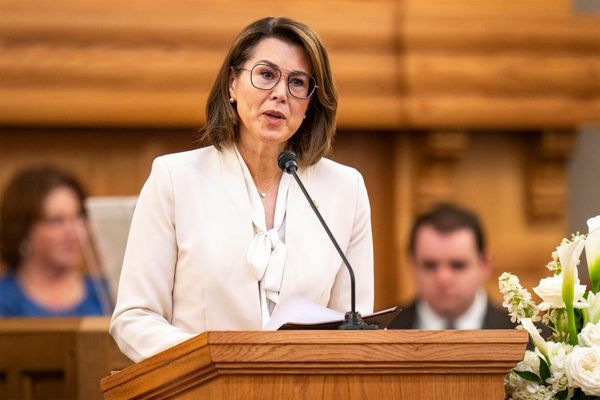
Machado's Panama visit was a calculated diplomatic showcase. She addressed the plenary session of Panama's National Assembly, received the key to Panama City from municipal authorities, and met with Panamanian President José Raúl Mulino — one of her closest allies in the region — to discuss what she described as the need to "find a democratic solution that brings stability" to Venezuela.
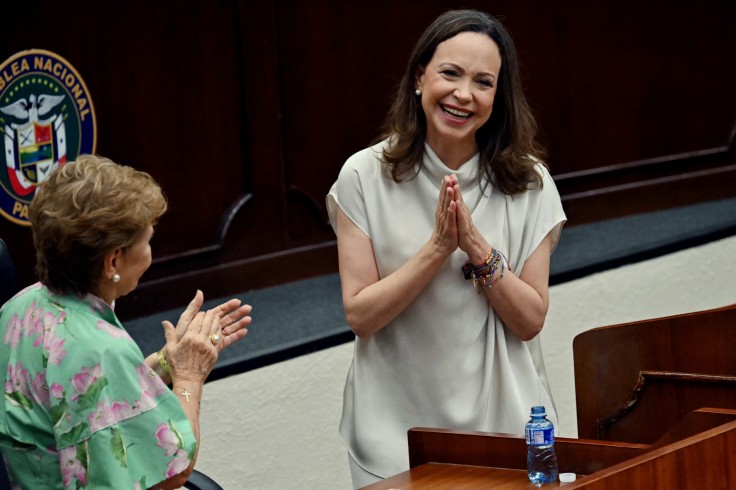
The most striking moment of her visit came when she paid tribute to the Venezuelans who crossed the Darién Gap. "More than 500,000 Venezuelans have crossed the Darién in search of freedom. Many remained on the way," she told Panama's parliament — a reference to the International Organization for Migration's data showing more than 450 documented disappearances in the jungle since 2014. It was a pointed reminder of the human cost of the crisis she is trying to resolve.
She also looked ahead: "What returns are different citizens, who have lived very painful experiences but who have also known the most beautiful face of international solidarity. Today, the vast majority are preparing to make the journey in reverse, and we will be waiting for them with open arms."
At her press conference, Machado was unambiguous about her political strategy: "There is one objective here, and that is to free our country; one purpose, the transition to democracy through free and fair presidential elections in which all Venezuelans, inside and outside the country, can vote."
She also confirmed she would run for president herself. "I will be a candidate, but there may be others, of course," she said. "I would love to compete with everyone, with anyone who wants to be a candidate," she continued according to a report from NBC.
The Panama visit also marked the moment Machado publicly acknowledged — for the first time explicitly — that the U.S.-designed stabilization phase may already be complete. She stated that the first of Rubio's three stages, stabilization, has already concluded, and that the other two stages — Recovery and Transition — often overlap with one another, suggesting the pace may be faster than Washington's public messaging implies.
The Rubio Roadmap: Three Phases, No Timeline
Understanding where Machado's return fits requires understanding the framework her most important ally — and her most significant constraint — has laid out. Secretary of State Marco Rubio initially outlined a three-phase plan for Venezuela right after Maduro's capture in January: stabilization, recovery, and transition. He repeated and reaffirmed that framework at President Trump's Cabinet meeting on May 27, 2026.
"In Venezuela, the process continues, that three-phase process, of, obviously, stabilization, recovery, and transition," Rubio said at the Cabinet meeting, before noting that over 10 million barrels of Venezuelan oil have been delivered to the United States since January 3, and that oil revenues are now flowing into a Treasury-monitored, KPMG-audited account rather than into corrupt hands.
Crucially, Rubio has cautioned that this is a complex process that could span several years, and has not indicated that elections could be held in the short term. That puts Washington's public posture at some distance from Machado's stated ambition of returning home before year's end and holding elections within a seven-to-nine month preparation window.
The Obstacles: What Machado Identifies as Impediments
The path back is strewn with obstacles Machado has been candid about. A genuinely democratic election would require seven to nine months of preparation, including the appointment of neutral electoral authorities, updated voter rolls, and guarantees that opposition candidates can run without interference or personal risk — none of which exist today. The release of political prisoners remains a guiding priority, a campaign Machado has taken all the way to the Vatican: she met Pope Leo in January and asked him to "intercede for all Venezuelans who remain kidnapped and disappeared." Meanwhile, acting President Delcy Rodríguez continues to project calm while Chavista loyalists remain embedded in the military, judiciary and bureaucracy — and Rodríguez has warned that Machado "will have to answer" if she sets foot back in the country.
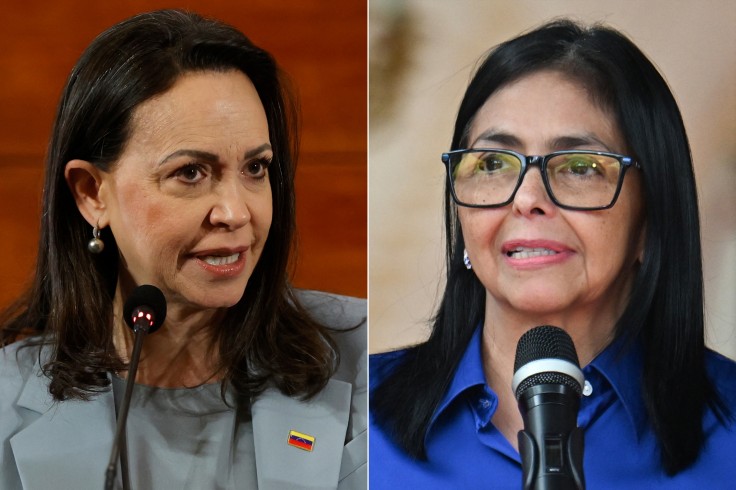
Then there is Washington itself. "The position of the United States and other allies undoubtedly carries weight. It is a matter of coordination. My return will facilitate the process — the timing has to be right," Machado told El País. The Trump administration's early decision to work with Rodríguez rather than Machado stunned the Venezuelan diaspora, and the fundamental tension has not resolved: the U.S. is currently conducting its Venezuela policy through the very apparatus Machado is trying to dismantle.
What Venezuelans Inside the Country Think
The public opinion picture inside Venezuela is significantly more positive than Washington's cautious posture might suggest. A nationwide survey conducted by Gold Glove Consulting in late January 2026 — the first face-to-face poll since the U.S. intervention — found that 83% of Venezuelans were optimistic about the future, more than half (55%) supported Maduro's arrest, and majorities approved of U.S. involvement in the transition process.
Machado herself commands a 72% approval rating among Venezuelans, according to a 2025 poll — an extraordinary figure for any politician in any country, and one that complicates Trump's early dismissal of her as someone who "doesn't have the support or respect" inside Venezuela.
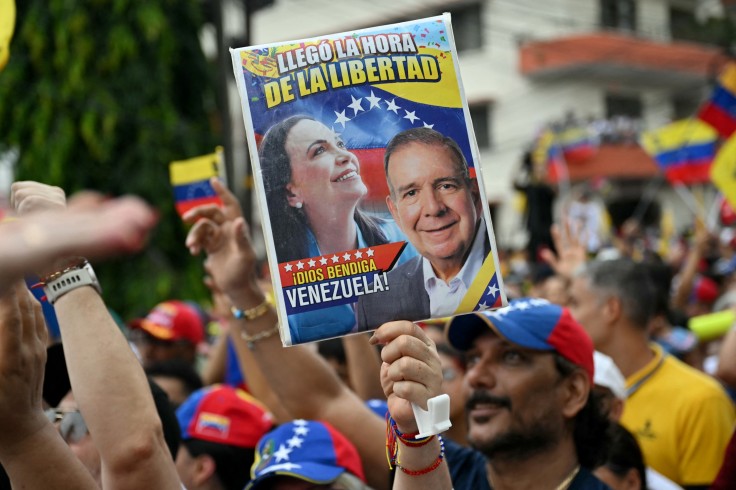
Machado has noted that since Maduro's capture, "a process of dismantling the repressive state" is underway — visible in the way people now speak more openly, with less fear, and in the gradual recovery of certain public freedoms. But she has been careful not to overstate the pace of change.
For the millions who stayed, Machado's return is not an abstract political event. It is the signal that the transition they voted for in 2024 — and that was stolen from them — may finally be arriving.
The Vision: What Machado Says Her Return Will Look Like
Machado has been consistent in describing her return not as a triumphant entry but as the beginning of a working process. In a video message released in the United States earlier this year, she said her return would focus on forging a "broad national agreement" to guarantee governability and prepare for "a new and massive electoral victory."
What she envisions for Venezuela after the transition is a country rebuilt on institutional foundations designed to last. "A day sooner, a day later, this regime will come to an end," she told El País. "What truly matters is the emerging Venezuela and how we ensure the construction of institutions that endure for centuries," she continued.
The clock is running. Machado has committed to returning before 2027. Rubio has confirmed the three-phase process is continuing. The Darién reversal — with some 22,000 Venezuelans already crossing back from Panama to Colombia in advance of an expected return wave — suggests that ordinary Venezuelans are not waiting and are already turning around.