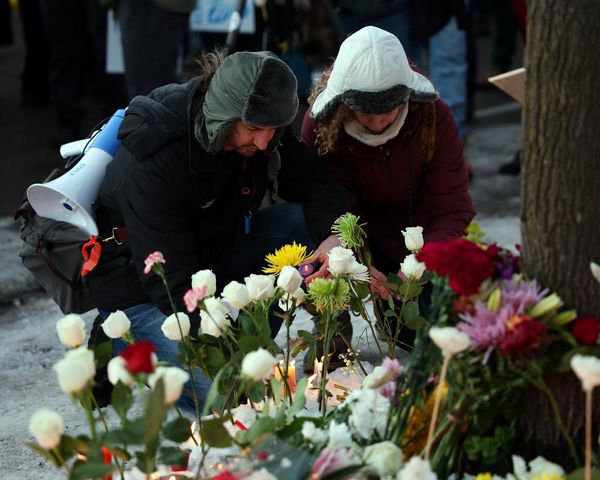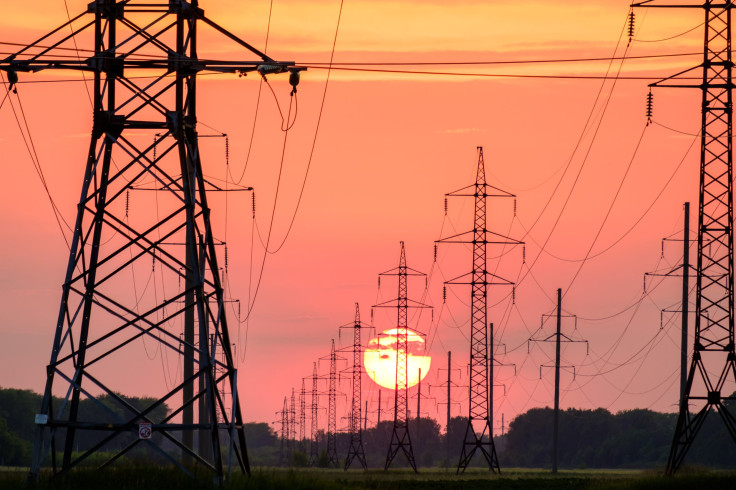
Over 25,000 Puerto Ricans were left in the dark as they celebrated Christmas Eve. Canadian-American LUMA Energy, the private power company responsible for power distribution in the island, claimed the blackouts were due to "bad weather."
The LUMA portal, which has 1.5 million subscribers, counted a total of 25,880 customers without service throughout the island at 10:20 pm local time on December 24, 2025, according to Dominican Republic-based newspaper Del Último Minuto.
"Our teams are actively responding to outages caused by severe weather in several communities, including areas of Barranquitas, Canóvanas, San Juan, Vega Alta, and Villalba," the company said on Facebook.
While no official blackout count has been released in the early days of 2026, there were several major island-wide blackouts throughout the last year, and numerous smaller interruptions.
In April 2025, Puerto Rico, an unincorporated United States territory, saw a system-wide power outage which was "not triggered by adverse weather conditions," as per a Government of Puerto Rico report.
"The fact that the Event happened under clear weather conditions – commonly called 'Bluesky' events – raises serious concerns, especially given similar large-scale blackouts that occurred on April 6, 2022, and December 31, 2024," investigators noted.
"The Energy Bureau of the Puerto Rico Public Service Regulatory Board has previously investigated similar events and issued specific recommendations to LUMA following the events," they continued.
Disputes between the Puerto Rican government and LUMA are far from new. Lawmakers, in fact, announced they had sued the power company on December 11, 2025, as Boricuas have battled chronic outages, increases in power bills and the sluggish reconstruction of the grid following Hurricane Maria in 2017.
Maria was the deadliest hurricane to hit Puerto Rico in modern history, making landfall as a Category-4 storm. With winds of up to 249.5 kilometers per hour (155 mph), it rampaged through the island on September 20, 2017, as it had already been managing the effects of Hurricane Irma, which had impacted northern Puerto Rico just two weeks earlier.
The storm knocked down 80% of Puerto Rico's utility poles and transmission lines, resulting in the longest and largest power outage in U.S. history. Puerto Ricans lived without power – and some without running water – for up to a year.
According to emergency and disaster management consulting firm Tidal Basin, the storm's official death toll rose to 2,975, including direct and indirect deaths prompted by prolonged lack of power, water and medical care.
Nicole González, co-founder and CTO of modular solar energy startup Raya Power, witnessed the devastation firsthand.
"Even though I grew up in the diaspora, Puerto Rico was always home – my family, my roots, my history are there. And every time I was back, the reality of energy insecurity was impossible to ignore. It wasn't a theoretical problem: it shaped daily life for the people I love and beyond," she told Latin Times.
"Hurricane Maria made that fragility painfully clear. Watching people navigate long blackouts from afar made me realize that access to something as basic as energy shouldn't depend on slow policy timelines or infrastructure you can't control," she added.
A tumultuous public-private partnership
The Puerto Rican government signed a transmission and distribution agreement with LUMA Energy on June 22, 2020, which granted the company full operational control over the island's electric grid for 15 years.
LUMA officially took over from the Puerto Rico Electric Power Authority (PREPA) on June 1, 2021 after a transition period, although the Institute for Energy Economics and Financial Analysis (IEEFA) had warned since October 2020 that the agreement would lead to full privatization and higher rates for Boricuas.
"Neither the transformation plan nor this contract will achieve a 20 cents per kilowatt-hour price of electricity, create 100% renewable energy system, ensure that a steady and stable workforce continues to serve Puerto Rico, or provide the island's citizens with strong, independent oversight to protect the public interest," IEEFA noted in a report.
Boricua journalist Bianca Graulau released a short documentary after the September 2022 Hurricane Fiona, which further strained the island's grid infrastructure. In it, she explored how LUMA's operations have prompted more power outages and resource insecurity in Puerto Rico.
Different to previous natural disasters, the consequences of Hurricane Fiona were to be dealt with by the Canadian-American LUMA.
"This was definitely the litmus test for LUMA, and I don't think they passed. We saw how slow they were, and our people were coming to us for help, they were calling us," said Luis Irizarry Pabón, then-mayor of the southern city of Ponce, in the film.
Nelson Lopez, a contractor working in Ponce following Hurricane Fiona, explained why he believed LUMA barred former power line workers like himself – previously employed by the public PREPA – from helping with the crisis:
"They see us as Indians. The American bosses who are there see us [as inferior]," he noted.
Following Hurricane Fiona, Boricuas have continued denouncing LUMA's operational inefficiencies. While the company's October 2025 quarterly report claimed customer service improvement and the updating of old equipment, a Frontiers in Public Health study from the same year found that a privatized energy sector had failed to stabilize electric services, which caused "increasingly frequent and prolonged blackouts and brownouts despite rising energy costs."
Most recently, Puerto Rico Governor Jennifer González-Colón told AP News that LUMA has nearly $11 billion USD in federal funds at its disposal to rebuild the grid, but has only been able to recover $550 million USD in reimbursements.
Governor Gonzalez-Colon, elected in November 2024, promised she would oust LUMA in her governorship campaign.
As easy as getting a new fridge: Modular solar alternatives
During the 9th Annual Summit of the Puerto Rico Solar + Energy Storage Association (SESA), held from October 27 to 29, 2025 in San Juan, Puerto Rico, stakeholders discussed the perilous situation for Boricuas.
In addition to fragile electrical infrastructure and slow disaster response capacities, the average residential electricity rate in Puerto Rico is 90.5% higher than in 282 urban areas across the U.S..
Thought leaders have long debated how to best aid Puerto Rico in its transition toward resource efficiency, stability and accessibility. Many, however, believe that this transformation must start with Boricuas themselves.
Nicole González and Meghan Wood met at a friend's wedding, and grew close due to their joint mission to democratize solar energy.
While González worked on the Mars Rover in NASA's Jet Propulsions Lab, she lost contact with her family for two weeks as Puerto Rico went dark after Hurricane Maria. In leaving her job at NASA, the Princeton and Stanford educated engineer sought to build solar solutions that are affordable, resilient and human-centered.
Meanwhile, Wood had become frustrated with the exclusivity of solar energy. In fact, a November 2025 study found that, while 91% of new renewable projects are now cheaper than fossil fuel alternatives, solar adoption is not evenly distributed; households with higher incomes and education are more likely to install solar energy equipment, while marginalized, lower-income communities face constrained access.
"I kept coming back to the same idea: if we can design technology that survives space exploration, surely we can design solutions that give people agency in their own homes," González said.
"That's what inspired me: the belief that engineering can restore dignity and resilience, and that people shouldn't have to wait in the dark for a future day where peace of mind will arrive," she added.
Raya Power makes a plug-and-play solar-plus-battery energy system that does not require professional design or installation, and can be set up in a few hours. The Raya solar alternative captures solar energy and stores it in batteries, which could run essential appliances and provide backup power during outages if needed.
"We set up the system in just a few hours, and unlike traditional systems that push power back to the grid, Raya powers your critical appliances directly. When the sun is shining, Raya powers your connected devices and charges its built-in battery," González explained.
"At night or on cloudy days, it seamlessly blends stored energy with grid power. And, when the grid goes down, Raya switches automatically to run off-grid," the CTO added.
In Puerto Rico, technology like Raya could be life saving, especially for those whose lives depend on respirators, refrigerated medicine such as insulin, or other electricity-dependent equipment.
And, as the market grows, Raya could prove a turning point in Boricuas' ability to hold their government and LUMA accountable. Already, more than 10% of the island's electricity consumption comes from rooftop solar, as communities increasingly take electricity reliability into their own hands, as per IEEFA.
Stakeholders at the SESA conference, especially installers and community organizations, welcomed González and Wood's innovation.
"People immediately saw the need for a modular product that serves renters and those who won't install a full rooftop system due to financial or structural barriers. [At the conference] we heard over and over again 'We've been waiting for something like this'," said González.


© 2025 Latin Times. All rights reserved. Do not reproduce without permission.