- More and more automakers are locking partial-automation behind paywalls.
- Consumers, meanwhile, are feeling burnt out on subscriptions.
- Brands are betting big that the future is subscription-based, even if drivers today are feeling a bit over-subscribed.
You might have noticed that car companies are starting to emulate Silicon Valley more than Detroit lately. That's no surprise—software is becoming paramount in automotive engineering. But it's also seeping into the business decisions that the big wigs on the top floors are buying into, and it all boils down to the Benjamins.
See, manufacturers are doubling down on the idea that recurring revenue spells out value after the car leaves the factory. Rather than relying on a one-time sale of a car or parts to repair them later down the road, brands have figured out that they can instead continue to rake in money once a car leaves the lot by offering up subscriptions. Now driver-assistance tech is becoming the latest way to push monthly payments onto consumers.

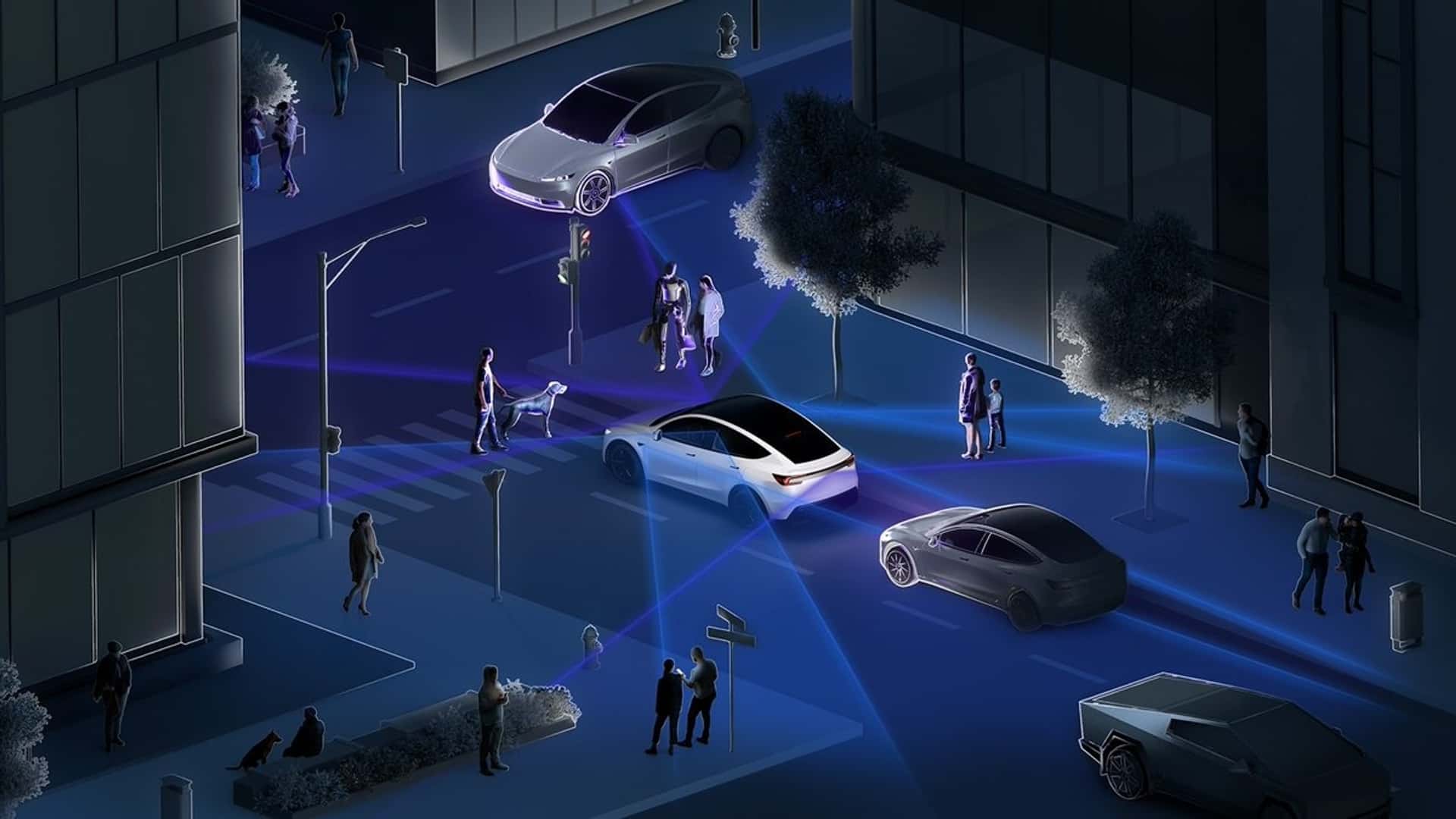
Tesla has been at the forefront of this movement for a while. Its Full Self-Driving subscription is a $99 per month foray into what advance driver assistance features can bring to the consumer—in fact, FSD (and originally its less-capable sibling, Autopilot) has helped to build Tesla into household brand that it is today.
But Tesla isn't the only brand in this game. Rivian recently launched a new $49.99 monthly subscription. GM's Super Cruise costs between $20 and $40 per month after the free trial period, and Ford's BlueCruise is $49.99.
Lucid has one coming, too. It even told investors last month that buyers would eventually be able to purchase a $69 monthly subscription for its partially-automated driving features (which could reach $199 depending on the capabilities).
"Autonomy subscriptions are the single biggest software monetization opportunity," one slide during a Lucid's March investor presentation read.
Now the problem: Consumers have subscription fatigue. Everything today feels like it's a recurring cost—Netflix, Spotify, Hulu, your weekly meal boxes, toothbrushes. The list goes on.
As vehicles become more software-based, automakers are taking features that were once tied to hardware and instead locking them behind a software paywall. Kathleen Rizk, the senior director of user experience at JD Power, told Automotive News that drivers are a bit peeved that it's costing even more money (let alone a subscription) to get the full capabilities of their vehicles after already buying it outright.
“Subscription services, in general, are really not liked in the vehicle,” said Rizk. “People feel like they’ve already spent a lot of money and they’re being nickel-and-dimed.” She added that because of the constraints of these systems, people generally don't see the value in buying hands-free driving features, whether through a one-time payment or a subscription.
BMW, for example, caught heat when it put heated seats behind a subscription in some (non-U.S.) markets. Mercedes-Benz was also dragged a bit after it locked performance behind a paywall. Lincoln took that lesson to heart and avoided subscriptions entirely with the Nautilus.
A bigger issue is that the value proposition isn't even there yet. When buying a Tesla, Rivian, Lucid, or pretty much everything else on the road today, you are still buying a Level 2 driver assistance system. That means you are ultimately responsible for driving the car, even if it feels like the vehicle is braking, accelerating, and steering for you.
Some consumers are still willing to pay for the convenience, though. General Motors logged $235 million in revenue from its Super Cruise subscribers in 2025, which it said numbered 620,000 by the end of the year. The company expects that to grow to $400 million in 2026.
Getting past Level 2 to higher levels of automated driving capability could unlock a far greater opportunity. And that's what the industry is working towards. Ford and GM both plan to add eyes-off driving to the near future. Lucid says Level 4 driving—full-blown point-to-point autonomy—is coming to its cars by 2029.
"L4 is our north star—to get there as fast as possible and in the end, be a profitable company and cash-flow positive," said Lucid CEO Marc Winterhoff.

Automakers are betting that when true autonomy arrives—the kind where you can take your hands off the wheel, eyes off the road, and liability off of your mind—consumers will be willing to shell out quite a bit of dough every month for the luxury. And they're probably right. But right now, we're still in that murky in-between phase, where the tech and people's willingness to subscribe are not in perfect alignment.