Mitch McConnell statement suggests Bill Pulte unqualified for DNI role
The Republican senator Mitch McConnell put out a scathing statement today suggesting that Donald Trump’s pick for acting director of national intelligence, Bill Pulte, is not qualified to serve in the role.
“Very few Senate-confirmable positions come with statutory eligibility requirements,” McConnell said. “There are good reasons why the director of national intelligence is one of them.”
Though he did not name Pulte in his statement, McConnell made clear that he would not vote for him to serve as DNI in a permanent capacity.
“Anyone performing this role of such immense public trust must have the extensive national security experience required by statute, and no nominee who falls short of this requirement will earn my vote,” he said.
McConnell was the only Republican to join with Democrats to vote against the confirmation of former DNI Tulsi Gabbard to the role, citing her “alarming lapses of judgment”.
“When a nominee’s record proves them unworthy of the highest public trust, and when their command of relevant policy falls short of the requirements of their office, the Senate should withhold its consent,” he said at the time.
Updated
Senate Republicans formally drop Trump's $1bn ballroom funding from immigration bill
Senate Republicans have officially dropped language providing up to $1bn for security upgrades to Donald Trump’s proposed White House ballroom from the updated text for their immigration enforcement bill released today.
GOP senators had already decided before the Memorial Day recess that they would not pass the $70bn legislation to restore funding to ICE and border patrol ahead of the 1 June deadline set by the US president amid concerns about the $1bn proposal for security measures and controversial plans to create a $1.8bn “anti-weaponization” fund (though the administration abandoned the latter yesterday).
Some Republican senators were concerned about the optics of funding the ballroom with taxpayer dollars amid a cost-of-living crisis in the lead-up to November’s midterm elections.
Republicans unveiled the revised bill shortly before the first procedural vote on a motion to proceed with the measure at about 2.30pm ET.
Updated
Bessent dodges questions on Trump’s tax audit immunity
At his Senate finance committee hearing earlier today, the US treasury secretary, Scott Bessent, dodged a slew of questions about Donald Trump’s contentious $1.8bn “anti-weaponization” fund – which is as of yesterday dead in the water – and repeatedly deferred to the justice department on the president’s IRS settlement.
“I’m unable to comment because of litigation,” he told the Democratic senator Sheldon Whitehouse. “Treasury is represented by the Department of Justice in all matters. They act as our attorneys, so I would suggest that you direct your questions to acting attorney general [Todd] Blanche.”
Bessent declined to comment on whether the provision that provides Trump and his family with immunity from IRS audits is still in place. Blanche said yesterday that it was.
The Democratic senator Catherine Cortez also pressed Bessent on whether other taxpayers whose returns were leaked alongside Trump’s would receive “the same immunity as President Trump and his family received”, but Bessent deflected once again.
“Treasury does not give any of that,” Bessent said. “We are represented by the justice department.”
Pressed again, he said only: “We will follow the instructions and the settlement.”
Updated
Rubio: Trump will attend Nato meeting in July
Mario Rubio, the US secretary of state, told the House foreign affairs committee today that Donald Trump will be attending the Nato meeting of heads of state in Turkey next month.
“The president himself will be attending,” Rubio said.
Trump has long criticized Nato but has escalated his rhetoric over the war in Iran. In April, he called the 77-year-old alliance a “paper tiger” and suggesting the US may consider leaving after Nato member countries ignored his call for military assistance to help reopen the strait of Hormuz.
“I think the next meeting of Nato and Turkey in July is probably the most important meeting in Nato’s history, because there are some things here that need to be cleared up and fixed,” Rubio said on Wednesday.
Updated
For anyone who needs a reminder on section 702 of the Foreign Intelligence Surveillance Act – due to expire next week – here’s an explainer:
Trump’s intelligence chief pick puts Fisa surveillance program renewal in doubt
Donald Trump’s appointment of a close political ally with no intelligence experience to lead the nation’s spy agencies has thrown last-ditch efforts to renew a critical surveillance program into doubt.
Bill Pulte, currently head of the Federal Housing Finance Agency (FHFA), major Republican donor and heir to a home construction fortune, was tapped by Trump to serve as acting director of national intelligence days after Tulsi Gabbard departed the role.
Senior Democrats immediately said the move could doom a fragile bipartisan agreement to renew section 702 of the Foreign Intelligence Surveillance Act, which is due to expire next week.
Section 702 permits US intelligence agencies to collect communications of foreign targets operating outside the country without a warrant. Congress is working toward a deadline of 12 June.
More here:
Rubio refuses to say who won the 2020 election
Jacobs then asked Rubio who won the 2020 presidential election.
Rubio declined to answer, insisting that he was “not here to answer” questions about that because “this is a foreign affairs committee”.
“I don’t answer the question because as secretary of state, I do not participate in domestic political issues,” he said.
Jacobs replied that the question wasn’t about a political issue but about democracy.
Back at Marco Rubio’s hearing, Democratic representative Sara Jacobs questioned the secretary of state on why he believes that Iran is losing the war if, by the metrics he laid out, the US is facing similar pressures.
Rubio said the Iranian regime was “deeply fractured”, the currency was devalued, the country had sustained “hundreds of billions of dollars” in damage to its military infrastructure and it had a worse economy than before the war.
Jacobs then hit back, highlighting that the Iranian leadership was intact with a more hardline leader in place, the strait of Hormuz is now closed because of the war, and that the United States is also suffering with inflation and high gas prices “with no end in sight” on day 97 of the war.
“Does this look like winning to you?” she asked Rubio.
She later added: “The American people are not stupid, Mr Secretary, we all know that this war is not over.”
Updated
Trump threatens tariffs on 60 trading partners including UK and Canada over ‘forced labour’
Donald Trump has threatened tariffs of between 10% and 12.5% on 60 trading partners including the UK, the EU and Australia over alleged forced labour failures, in the latest attempt to revive his signature trade policy.
The European Union immediately hit back, saying it expected the US to respect the tariff deal it entered into last July and arguing that stealth tariffs breached the spirit of that agreement.
The proposed levies on partners accused of allowing imports of goods produced by workers under coercion come after the US supreme court ruled in February that the president’s “liberation day” tariffs were illegal.
Trump responded by imposing 10% across-the-board tariffs, but last month the US trade court found those were also unlawful, although they remain in place during the appeal process.
The latest proposal for tariffs on the grounds of forced labour, which would affect major partners including Canada, Japan, Norway, Taiwan and China, would enable Trump to skirt those previous court-imposed limits on his protectionist agenda. They come as the US threatens to impose fresh levies of 25% on Brazil.
The US trade representative, Jamieson Greer, said: “The failure of our most important trading partners to address the importation of goods made with forced labor is unacceptable. This creates a dynamic where American workers are forced to compete globally on an unlevel playing field. We will no longer tolerate this disparity.”
Here’s Lisa’s full report:
Marco Rubio earlier admitted that he had never heard the name of Bill Pulte, Donald Trump’s controversial pick to be acting director of national intelligence, during his years of experience with the US intelligence community.
Democratic representative Bill Keating cited Rubio’s background and expertise in intelligence matters from his years on the Senate intelligence committee and his current roles as top US diplomat and Trump’s national security adviser.
“Have you ever specifically, in the context of the intelligence community, heard the name Bill Pulte?” Keating asked.
“In the context of intelligence?” Rubio repeated. “No.”
“Never heard his name?” Keating interrupted. “Thank you for answering that. Never even heard his name, given all your years of experience and your position now. Never heard the name.”
Trump’s appointment of federal housing regulator Pulte, a political ally with no national security experience to lead the sprawling US intelligence community at a time of war and global tensions, set off alarm bells in Washington yesterday.
John Thune, the Senate majority leader, told reporters that “we don’t need a weaponized” national intelligence director and Pulte would have “a lengthy road ahead of him” if he were nominated to take the post on a permanent basis.
Updated
Rubio then came back to answer Castro’s question.
He insisted that Israel has been targeting Hezbollah in southern Lebanon and “taking territory in the south to deny them launching space”.
The US got “multiple indications” that Israel was considering conducting strikes on Beirut (well, for one, Netanyahu said they were going to). At that time, Rubio said, the Lebanese authorities had reached out to the US to say that Hezbollah had contacted them and said that they would stop attacking Israel if Israel did not attack Beirut.
He said Hezbollah later launched rockets towards northern Israel anyway, “so, it’s an ongoing challenge”. (In fact, attacks from both sides were reported after Trump’s announcement, and both Israeli officials and Hezbollah made statements that cast doubt on the durability of the agreement – you can brush up on our story here).
Asked whether he agrees that Israel should end its military campaign in Lebanon and support Trump’s negotiations for a peace agreement with Iran, Rubio accused Hezbollah of violating the ceasefire agreement.
Pulled up by representative Joaquin Castro that “Israel has also been bombing throughout”, Rubio claims these are “two separate things”.
He defended Israel as having not “massively” bombed Beirut “for some time”, and also defended its ongoing invasion and occupation of swathes of southern Lebanon as part of its “right to self-defence”.
Castro began to ask, “So why did the president have to tell Israel to stop?” but his time expired before Rubio could respond.
Regime change 'was not the goal' of war on Iran, says Rubio
The secretary of state then claimed that changing the government of Iran was not a goal of the operation.
“Look, we would love to see a change in Iran … but that was not the goal of our mission,” Rubio said.
As you might remember, that is contrary to Donald Trump stating regime change as an objective in the early days of the war and repeatedly (and dangerously) urging Iranians to overthrow their government.
Updated
Marco Rubio then told lawmakers that the aim of the war against Iran was to degrade a “conventional shield” of missiles, drones and a navy, “behind which they could build their nuclear program”.
That was the purpose of Epic Fury, it achieved its purpose in degrading that conventional shield.
'Everyone knew what Iran would do in response,' says Rubio
In a heated exchange with Democratic ranking member Gregory Meeks, Marco Rubio initially skirted a question on whether he had warned Donald Trump that launching a war on Iran would drive up costs on gas, food, travel and shipments.
Rubio then refused to give a yes or no answer on whether or not he warned the president that starting a war against Iran “could result in the regime placing a chokehold on the strait of Hormuz”.
But he added: “The president and the administration was aware there would be consequences to action, but the consequences of Iran having a nuclear weapon were worse.”
He added: “All the risk factors were understood, but the important risk factor was Iran cannot have a nuclear weapon.”
Asked again if he warned Trump of the potential consequences, Rubio said: “Everyone was aware of what Iran might do in retaliation … but they cannot have a nuclear weapon.”
And asked if he warned the president that Iran would launch retaliatory attacks against US partners, allies and Americans living or working in the region, Rubio said: “Everyone knew what Iran would do in response, we were prepared for any response … but they can’t have a nuclear weapon.”
That the administration knew that attacking Iran would place the US’s regional allies in the line of fire and drive up costs but went to war anyway is quite an admission from the secretary of state.
I wonder what Gulf allies who have come under attack and lost residents during this war, such as Kuwait today, will make of that, not to mention everyone else around the world who has been affected by the crisis in the strait, among them Americans who will be voting in the midterms in a few short months.
Updated
From 10am ET, secretary of state Marco Rubio is due to testify before the House foreign affairs committee on the president’s foreign policy agenda and his department’s 2027 budget request amid the war against Iran.
In back-to-back hearings before a House and Senate panel yesterday, Rubio was grilled over the ongoing Ebola outbreak, the ongoing conflict in the Middle East, deadly US strikes on alleged drug boats in the Caribbean and eastern Pacific, and the delayed sale of arms to Taiwan.
He’s likely to face more of the same today and I’ll bring you all the key lines here.
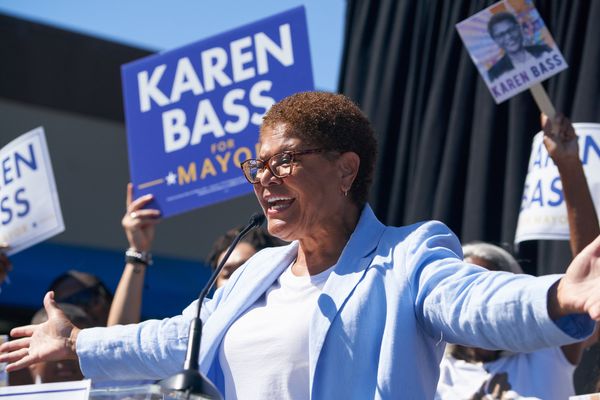
Karen Bass heads to LA mayoral runoff after falling short of majority
Also last night, Karen Bass came out ahead in the heated primary for Los Angeles mayor, but with less than 50% of the vote will have to defend her seat in November’s general election.
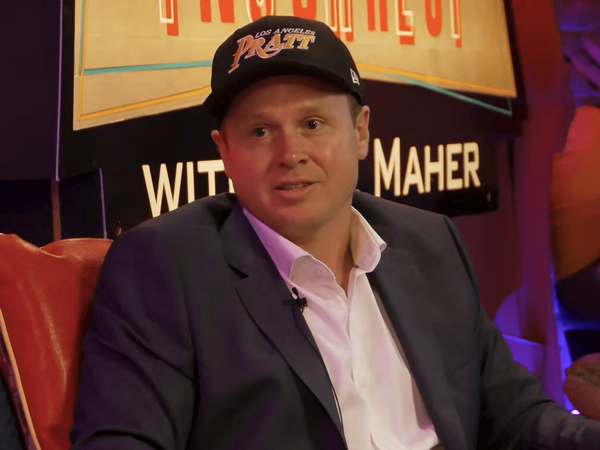
She will face either former reality TV star Spencer Pratt or city council member Nithya Raman, in November. As of yesterday evening, it was still unclear who would move on.
In remarks to voters yesterday evening, Bass said she would spend the next four years addressing homelessness and building more housing units.
She described LA as a rebounding city, and vowed to build on the progress made over the last three and a half years. Invoking the “dark day” a year ago when Donald Trump sent immigration troops into the city, Bass declared: “We are a city that is unified.”
Here’s Uwa’s full report:
Trump-backed candidate loses in Iowa governor’s race as Democrats look to flip Senate seat
Iowa voters cast their ballots in yesterday’s heated primaries, setting up for months of fervent campaigning ahead of the November midterms in contests that could determine the balance of power in Congress.
A red state that the GOP has dominated for the past decade, Democrats believe they can be competitive in three of its four House races, its Senate election, and the contest to replace Kim Reynolds, the retiring Republican governor.
Last night, Josh Turek, the state house representative who benefited from millions of dollars in outside spending and the endorsement of a slew of top Democrats, won the Democratic primary in a race to replace retiring Republican senator Joni Ernst.
In a proxy battle for which direction the party would take, he defeated Zach Wahls, the state senator who pitched himself to voters as an outsider who would stand up to party elites including Chuck Schumer, the US Senate minority leader whom he blamed for weakening the party.
Turek will face Ashley Hinson, a Republican US representative who Donald Trump endorsed to replace Ernst.
In the gubernatorial race, Democrats believe they have a historically strong candidate in Rob Sand, the auditor who is the last member of the party holding statewide elected office. Sand ran unopposed in the primary.
Five candidates vied for the Republican nomination, with Zach Lahn emerging as the winner. Representative Randy Feenstra, who came in second, had been endorsed by Trump. His loss marks an end to Trump’s streak of winning endorsements – until yesterday, every candidate Trump backed since March had won their primary.
Read Chris’s full report here:
Trump also said he still felt optimistic he would have a deal “fairly quickly” and once again downplayed the impact of his war against Iran on Americans’ finances.
“Everyone said it was going to be $300, $400 a barrel, it’s $98 a barrel but that’s not a big price to pay if you look at the possibility of them having a nuclear weapon,” he told the Pod Force One podcast.
The president also suggested he was in no rush to end the crisis in the strait of Hormuz, saying it was possible that the US naval blockade of the critical waterway could remain in place for weeks.
Asked if it would still be in place by Labor Day on 7 September, Trump replied: “I don’t know. I mean, I think it could be [closed through Labor Day], but I think it’s unlikely, I think that we’ll have it. I think this will resolve itself fairly quickly.”
Updated
Trump says he was 'perturbed' with Netanyahu over attacks on Lebanon
More now from Donald Trump’s interview with the New York Post’s Pod Force One podcast.
The president confirmed Axios’s report that he yelled and cursed at Israeli prime minister Benjamin Netanyahu over Israel’s threats to resume airstrikes on Beirut’s southern suburbs earlier this week.
Israel’s continued assault on Lebanon had threatened to derail talks on ending the president’s war against Iran.
Axios reported, citing two US officials and a third source briefed on the call, that Trump told Netanyahu he was “fucking crazy” and “you’d be in prison if it weren’t for me”.
Asked if he said what Axios reported, Trump told the podcast: “I did.”
I don’t want to say ‘angry’. I was a little bit perturbed at his constantly fighting with Lebanon, you know, at some point I said, ‘Bibi, we gotta stop this, we gotta stop it.’
Trump then insisted that they have “worked very well together”. “I like Bibi a lot. And I work very well with him,” he added.
Updated
A set of sweeping policy changes unveiled by the White House would leave officials appointed by Donald Trump vetting every public grant issued to universities and nongovernmental organizations on the basis of their fidelity to “American values”, as defined by the president, triggering widespread concern.
All federal grants approved by Trump’s political appointees must “demonstrably advance the president’s policy priorities”, according to a lengthy proposal published by the office of management and budget (OMB).
Federal awards during the Biden administration “were often used during those years to promote a ‘woke’ policy agenda that did not reflect the values of the vast majority of the American public”, the proposal claims in its executive summary. “Collectively, these policies wasted a great amount of taxpayer resources and caused great harm to public trust in government.”
A 400-page document proposing rule changes was published Friday without a press release or other formal attention, and first reported by the New York Times. Nonetheless, by Tuesday afternoon, more than 3,000 public comments had been offered about the proposal, almost exclusively in alarmed opposition.
Trump says Vance-Rubio 2028 ticket would be 'unbeatable'
In his interview with the ‘Pod Force One’ podcast, Trump said that vice-president JD Vance and US secretary of state Marco Rubio running together in 2028 would be “unbeatable”.
Both men are seen as contenders for the 2028 Republican nomination, and Rubio’s recent turn at the White House podium drew praise from Republicans and even some Democrats who noted his smooth performance, which included quips and a 1990s hip-hop reference to describe Iran’s negotiating position.
“I would think that JD and Marco as a team would be very hard to beat,” Trump told Miranda Devine in a podcast aired on Wednesday.
“It’s interesting, human thing, the human equation. So I watch them together, they get along great,” he added.
Trump has continued to fuel the succession talk even as both Vance and Rubio downplay their 2028 ambitions.
Trump suggests he will make Todd Blanche permanent US attorney general
Donald Trump said he believed he would make acting attorney general Todd Blanche permanent the top US law enforcement officer.
Asked in an interview broadcast on Wednesday on ‘Pod Force One’ if Blanche would be US attorney general, Trump replied: “I think he will.”
Updated
Karen Bass has come out ahead in Tuesday’s heated primary for Los Angeles mayor, but with less than 50% of the vote will have to defend her seat in November’s general election.
Bass will face either Spencer Pratt, a former reality TV star, or city council member Nithya Raman, in November. As of Tuesday evening, it was still unclear who would move on.
In remarks to voters on Tuesday evening, Bass said she would spend the next four years addressing homelessness and building more housing units.
She described Los Angeles as a rebounding city, and vowed to build on the progress made over the last three and a half years. Invoking the “dark day” a year ago when Donald Trump sent immigration troops into the city, Bass declared: “We are a city that is unified.”
Los Angeles’s next mayor will be tasked with showing progress in curbing the homelessness crisis, an issue that has long vexed the nation’s second-most populous city, revitalizing Hollywood amid a production exodus and shoring up emergency response programs after last year’s deadly wildfires.
The race initially seemed poised to be an intra-party match-up between Bass and her former ally Raman.
But the contest took a turn in its final weeks as Pratt made substantial gains in polling and sparked national attention with controversial campaign videos and a combative debate performance.
Federal workers experiencing ‘PTSD-like symptoms’ after unlawful firings by Trump administration
US federal workers laid off by the Trump administration said they are experiencing mental health effects, including PTSD-like symptoms, from losing their jobs, according to a new survey.
More than 300 fired probationary employees were surveyed, with 95% reporting ongoing mental health effects, according to 27UNIHTED, a network of former National Institute of Health (NIH) employees. Nearly half said they are experiencing PTSD-like symptoms, and a quarter are taking new medications to manage symptoms.
Survey respondents were located across 43 states and the US Virgin Islands and had worked in 12 different departments across 15 agencies, bureaus and subgroups.
The employees are a tiny fraction of the more than 300,000 federal workers who were laid off or pushed to resign or retire since the start of Donald Trump’s second term. More than 25,000 workers were laid off in the middle of their probationary period, meaning they had started their positions within a year or two when they were abruptly fired.
Some of the most crucial races to flip are now set for November, with massive spending expected in contests seen as toss-ups, but even in those rated to lean toward Republicans given the national headwinds against the party in power.
In New Jersey, Democrats nominated former healthcare executive and US navy veteran Rebecca Bennett after a crowded primary to take on Republican congressman Tom Kean Jr, who ran unopposed, in a suburban swing district that Trump carried narrowly last year. The race took on a renewed importance in recent months, as constituents – and colleagues – question his whereabouts amid a mysterious three-month absence from Congress.
In Iowa, where Democrats are expected to spend big, rematches were set in districts that two years ago produced some of the closest House races in the country. And a more moderate challenger running on a “prairie populism” message gave Democrats hope they could win the US Senate seat that is open after incumbent Joni Ernst decided not to run.
Josh Turek, who represents a Trump-friendly legislative district in the state legislature beat out state senator Zach Wahls, who was running a more anti-establishment campaign, and will face former broadcaster Ashley Hinson this fall.
After Turek’s win, Cook Political Report moved the race from “likely Republican” to “lean Republican”, noting that Turek’s life story (he was born with spina bifida from his father’s exposure to Agent Orange in Vietnam, uses a wheelchair and is a Paralymic gold medalist) and moderate appeal could grab voters in a dismal environment for Republicans.
In a statement after his win, Turek said: “I will be a real fighter for Iowans, the middle class and our working families. So from now until November, I welcome all Iowans – Democrats, Republicans, and Independents alike – to join our team.”
California primary unresolved as voters choose midterm candidates
Hello and welcome to the US politics live blog.
California’s crowded primary for governor remains up in the air after three leading candidates tested voters’ appetites for an experienced politician or promises of sweeping change.
Though votes were still being counted, Democrats Xavier Becerra and Tom Steyer and Republican Steve Hilton started looking to November, laying out their visions for leading the nation’s most populous state and one of the world’s largest economies.
It followed Tuesday’s primary votes, that could see critical districts flip in both the House and Senate, setting up a series of high-stakes general election contests in a midterm year expected to favor Democrats.
Among the most watched races are: a New Jersey Democrat who could oust a Republican incumbent absent with a mystery medical issue for months, several Iowa Democrats hoping to flip their red-leaning state, as well as California’s redrawn maps that have given Democrats an advantage in the heavily blue state.
In the golden state’s governor race, only two will advance to the general election, however, and the Associated Press has not yet called the primary for any candidate but Hilton and Becerra were leading so far, with Steyer running slightly further back.
“Change is coming to California, and it’s long overdue,” Hilton told supporters after polls closed, reflecting his campaign message that the state needs a dramatic reset after more than 15 years of Democratic rule.
Steyer also campaigned on change and declared Tuesday that he would prevail over monied interests that strived to defeat him.
Becerra pitched himself as the steady hand who can lead the state against intrusions from the Trump administration. “The underdog stayed in the fight,” Becerra said to applause.
In other developments:
-
Karen Bass came out ahead in Tuesday’s heated primary for Los Angeles mayor, but with less than 50% of the vote will have to defend her seat in November’s general election. She’ll likely run against either Spencer Pratt, a former reality TV star, or city council member Nithya Raman.
-
Iowa state representative Josh Turek won the Democratic nomination for the state’s open US Senate seat – setting him up to face off against Ashley Hinson in the November general election. A former television anchor turned state senator, Hinson was endorsed by Donald Trump and retiring senator Joni Ernst.
-
Adam Hamawy won the Democratic nomination for New Jersey’s 12th congressional district, teeing the army doctor and political newcomer up to face off against Republican Gregg Mele in November’s general election. Hamawy decided to run for office after returning from a medical mission in Gaza in 2024 and meeting congresswoman Bonnie Watson Coleman, who announced her retirement in November 2025.
-
Deb Haaland won the Democratic nomination for governor in New Mexico. If elected in the November general election, Haaland would become the first Native American woman governor elected in the country.
-
Christina Bohannan won the Democratic nomination for Iowa’s 1st congressional district. She will compete against incumbent Republican congresswoman Mariannette Miller-Meeks in the November general election
-
Zach Lahn narrowly won the Republican nomination for governor, and will face off against Democrat Rob Sand in Iowa’s general election this November. Five Republicans competed for the nomination to replace retiring Republican governor Kim Reynolds.
-
Former Navy helicopter pilot Rebecca Benett won the Democratic nomination for New Jersey’s 7th congressional district, and will challenge Republican congressman Tom Kean Jr. in the general election. Kean, who’s been absent from Congress, citing a health issue, since March shared a statement on social media saying he’s “more energized than ever” and will “be completely transparent as to the nature of my medical condition” when he returns to work in “a matter of weeks”.